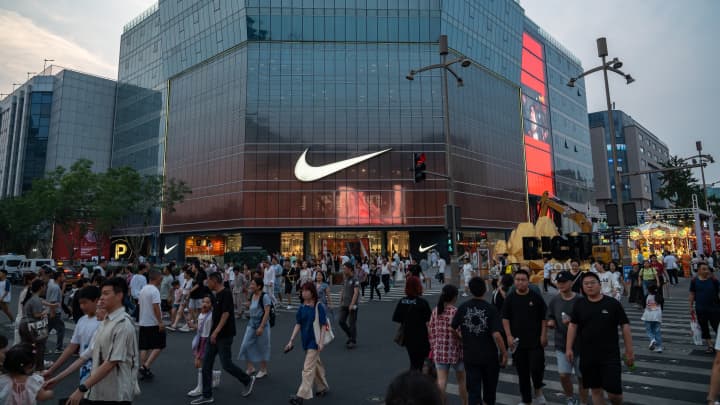
Twilight of the Giants: Why America’s Consumer Empires are Falters in China
For decades, the triumvirate of Nike, Starbucks, and General Motors stood as the undisputed vanguards of Western aspirational capitalism in China. To hold a venti cup on a bustling Shanghai thoroughfare, to lace up the latest Air Jordans in Beijing, or to glide through the neon-lit avenues of Guangzhou in a Buick was to participate in a shared, global liturgy of modern luxury. These brands did not merely sell products; they sold a lifestyle of effortless upward mobility. Today, however, that glittering mythos is fracturing. The effortless dominance of Corporate America is yielding to a harsher, more complex reality where domestic champions, geopolitical friction, and a profound cultural pivot have rewritten the rules of the world’s most coveted consumer market.
The most potent catalyst of this shift is the quiet, fierce rise of the domestic competitor. Once dismissed by Western executives as mere copycats, Chinese brands have staged a masterful counteroffensive by marrying rapid technological agility with a deep, intuitive sense of national pride—a cultural phenomenon known as Guochao, or the "national tide." In the automotive sector, the purring internal combustion engines of General Motors have been outpaced by the whisper-quiet, software-laden electric fleets of indigenous giants like BYD. In the cafes of tier-one cities, Starbucks’ cathedral-like sanctuaries are being bypassed for the hyper-efficient, digital-first kiosks of Luckin Coffee, which serves palates tuned to local flavors at a fraction of the price. Meanwhile, sportswear titan Nike finds its hegemony contested by Anta and Li-Ning, brands that have successfully infused high-performance athletic wear with traditional Chinese aesthetics.
```
"The era of the default premium for Western logos is over.
Today’s Chinese consumer demands cultural alignment and hyper-localized utility,
not just a heritage story from Beaverton or Detroit."
```
Beneath this commercial rivalry lies a deeper, more volatile undercurrent of geopolitics and changing consumer psychology. The modern Chinese consumer is younger, fiercely patriotic, and digitally native in a way that bypasses the traditional retail paradigms of the West. Amid escalating trade tensions between Washington and Beijing, the purchase of an American product is no longer a neutral act of consumption; for some, it has become a fraught political choice. Combined with a cooling domestic economy that has bred a new, calculated pragmatism among shoppers, the flashy allure of Western heritage is losing its luster. Consumers are no longer willing to pay a premium for a foreign name when home-grown alternatives offer equal sophistication, superior digital integration, and a resonant sense of cultural belonging.
What we are witnessing is not necessarily the expulsion of American brands, but rather their humbling. The gilded age of effortless expansion has given way to an era of bruising, street-by-street combat. To survive, these corporate titans can no longer rely on the inertia of their global prestige; they must learn to operate not as benevolent tutors of Western taste, but as agile guests in a market that has outgrown its need for them. The narrative of global commerce is no longer being written in English and translated for the East—it is being authored, in real time, by a sovereign Chinese consumer class that knows its own worth.