The Midsummer Theater: August 2026’s Celestial Choreography
In an era where our digital screens demand an increasingly claustrophobic intimacy, the night sky remains the last great democratizing canvas. August 2026 arrives not merely as a transition into the twilight of summer, but as a densely choreographed theatrical season for the cosmos. NASA’s latest astronomical dispatches reveal a month of rare, overlapping celestial phenomena—a sequence of shadows and luminescence that promises to pull our collective gaze upward. From the sudden, chilling poetry of a solar eclipse to the reliable, fire-streaked geometry of the Perseids, the heavens this month offer a stark reminder of the clockwork operating silently above our neon-lit anxieties.
The month’s headlining act is undoubtedly the solar eclipse, a moment of profound cosmic chiaroscuro that temporarily suspends the mundane rhythm of the daytime world. As the moon slides across the sun, casting its cool, sweeping shadow, the terrestrial landscape is briefly bathed in that eerie, silver-gray light that has, for millennia, inspired both existential dread and spiritual devotion. Yet, even as the sun reclaims its dominance, the twilight hours of August offer no respite from beauty. Venus, hanging low and brilliant in the post-sunset sky, reaches its peak evening luminosity. It acts as a singular, piercing beacon in the west—a planetary sentinel that outshines the encroaching dusk and provides a steady anchor for those wandering through the warm August nights.
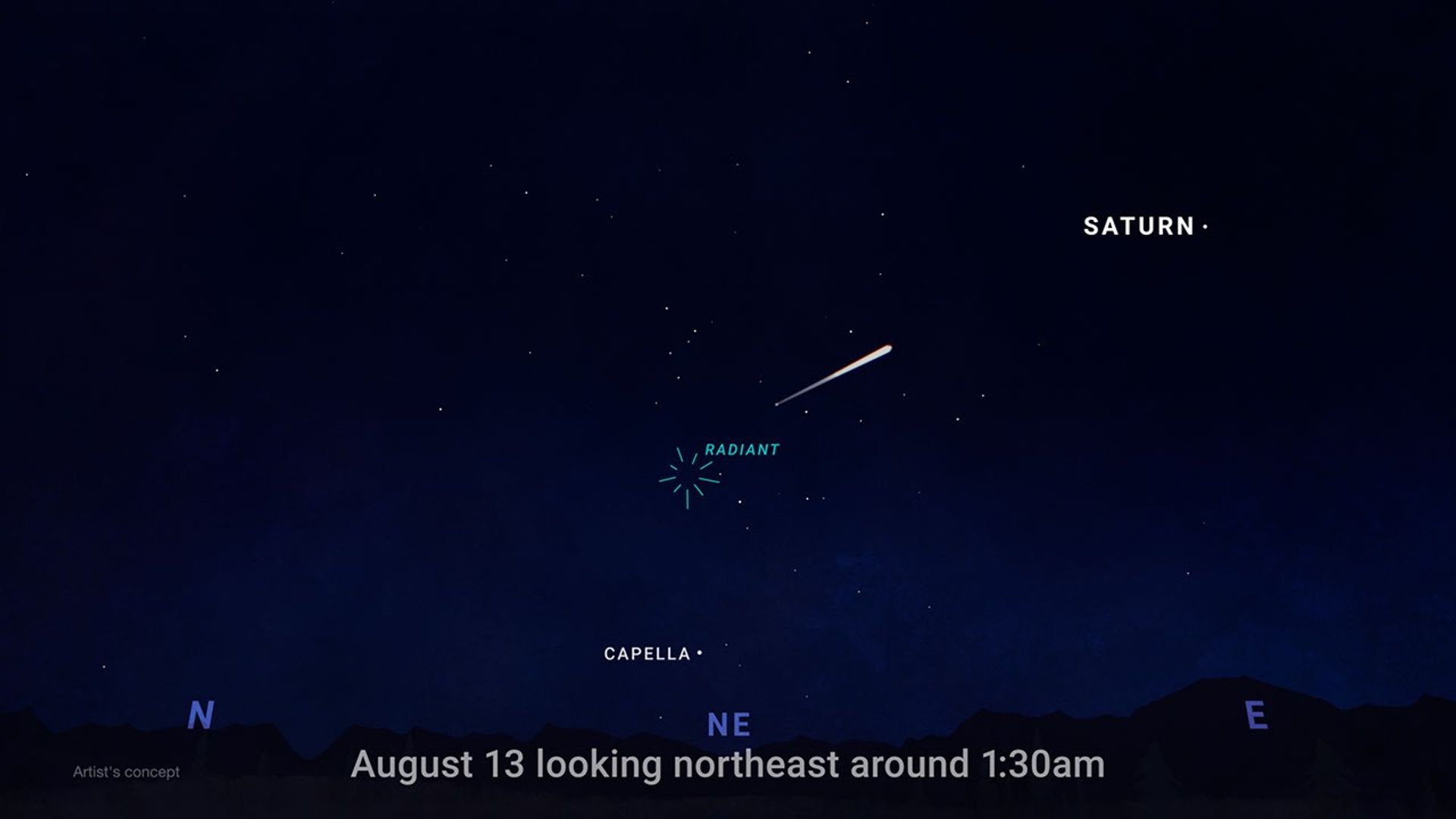
For the nocturnal observer, however, the most intimate communion occurs during the mid-month peak of the Perseid meteor shower. Emerging from the dusty wake of Comet Swift-Tuttle, these celestial debris streaks perform a delicate, high-velocity ballet across the atmosphere, incinerating in brief, brilliant gasps of light. This annual streak of cosmic dust is juxtaposed against the month's final act: a deep partial lunar eclipse. To watch the Earth’s shadow slowly bite into the face of the moon, staining it in shades of charcoal and copper, is to witness a grand celestial alignment in real-time. It is a slow-motion dimming that brings August to a quiet, contemplative close, leaving the observer with a lingering sense of our own fragile place in the infinite.
Ultimately, this August’s skywatching suite is more than a checklist for amateur astronomers; it is a profound exercise in perspective. In a cultural moment obsessed with the immediate, the hyper-local, and the disposable, the slow, inevitable movement of these celestial bodies offers a different kind of currency—one measured in light-years and orbital cycles. To stand beneath the August canopy, watching a meteor burn out or a planet assert its quiet dominance over the horizon, is to participate in an ancient human ritual. It is an invitation to pause, to look up, and to remember that we are, after all, merely passengers on a minor planet drifting through an exquisitely ordered wilderness.