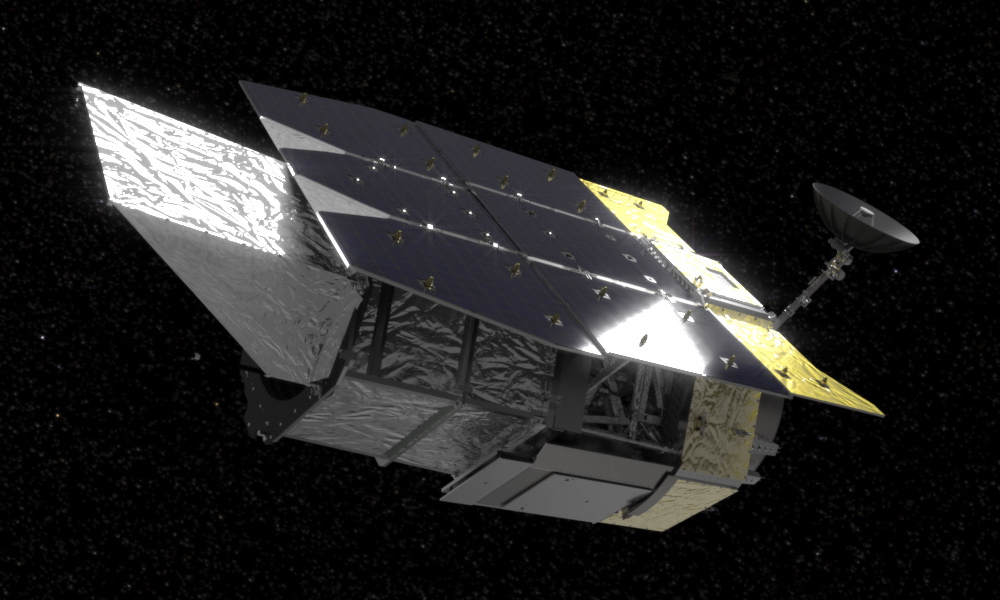
The Cartographer of the Cosmos: Inside NASA’s Visionary Roman Space Telescope
In the theater of modern astrophysics, we have long been accustomed to peering through keyholes. The Hubble Space Telescope offered us exquisite, pinpoint portraits of deep space, while the James Webb Space Telescope peeled back the dusty veils of the early universe with surgical infrared precision. Yet, to truly comprehend the architecture of the cosmos, one must occasionally trade the scalpel for the wide-angle lens. Enter the Nancy Grace Roman Space Telescope—NASA’s next premier observatory, named in honor of the pioneering astronomer often called the "Mother of Hubble." Roman, who fought through the mid-century institutional gatekeeping of American science to orchestrate the dawn of space-based astronomy, now lends her name to an instrument designed not merely to look, but to sweep.
If Hubble is a magnifying glass, the Roman Space Telescope is a panoramic window. Scheduled to launch in the late 2020s, Roman boasts a field of view one hundred times greater than that of Hubble, allowing it to capture vast swathes of the night sky in a single, breathtaking exposure. This is not merely an upgrade in scale; it is a fundamental shift in scientific strategy. By surveying millions of galaxies, Roman is poised to tackle the twin phantoms of modern cosmology: dark matter, the invisible scaffolding holding the universe together, and dark energy, the mysterious force accelerating its expansion. Furthermore, the observatory will act as a cosmic census-taker, scouting the outer reaches of our Milky Way for thousands of undiscovered exoplanets through gravitational microlensing—the subtle bending of distant starlight by the gravity of intervening worlds.
There is a profound, generational symmetry in the way this mission is being introduced to the public, particularly through educational initiatives aimed at middle-school students. The young minds currently navigating the basics of physics in classrooms today will be the graduate students and lead researchers analyzing Roman’s data stream a decade from now. For this upcoming generation, the existential questions that have baffled humanity for millennia—What is the universe made of? Are we alone in the dark?—will transition from philosophical musings into concrete, empirical data. By scanning the heavens with unprecedented breadth and clarity, the Nancy Grace Roman Space Telescope does not just offer us a map of the stars; it provides the next generation with a blueprint for discovery, transforming the formidable, silent void into a legible canvas of light and shadow.