Tensions Escalate in Middle East as US and Iran Trade Strikes Over Maritime Attack
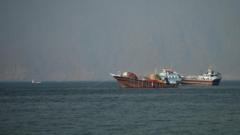
WASHINGTON/TEHRAN — The United States military has launched targeted airstrikes against Iranian-aligned facilities following a highly disruptive attack on a commercial cargo vessel in strategic Middle Eastern shipping lanes. According to Department of Defense officials, the precision U.S. strikes aimed to degrade the operational capabilities of regional militias responsible for threatening international maritime commerce. The Pentagon asserted that the operation was a direct, defensive response to a drone and missile assault on a container ship, which Washington attributes to Tehran-backed forces. U.S. administration officials emphasized that the action was necessary to protect the free flow of global trade and defend coalition forces stationed in the region.
In response, Tehran has strongly condemned the American military action, accusing Washington of violating a fragile, unwritten bilateral understanding aimed at preventing regional escalation. Iranian state media reported that in retaliation, forces linked to the Islamic Revolutionary Guard Corps (IRGC) launched counter-strikes against installations housing American personnel. "The United States has directly breached our mutual understandings and has chosen the path of aggression," an Iranian foreign ministry spokesperson stated. Iranian officials warned that any further unilateral military actions by the U.S. or its allies would be met with an increasingly severe and proportionate response, raising fears of an uncontrolled cycle of violence.
This latest conflict threatens to dismantle the quiet, backchannel diplomatic efforts that Washington and Tehran have pursued over the last year. Prior to the current escalation, informal negotiations had established a delicate de-escalation framework. This arrangement previously resulted in a lull in proxy attacks against U.S. military bases in Iraq and Syria, alongside targeted sanctions relief and prisoner exchanges. However, the persistence of maritime threats in vital waterways has pushed these diplomatic guardrails to their breaking point. Geopolitical analysts note that the current crisis highlights the limits of informal agreements when regional proxies operate with significant autonomy.
With global shipping giants already rerouting vessels away from critical maritime chokepoints, international observers are warning of severe economic consequences if the hostilities persist. The United Nations Security Council has called for an emergency briefing to address the rising volatility, urging all parties to exercise maximum restraint. For now, both Washington and Tehran remain locked in a dangerous posture of deterrence, with each side asserting that the responsibility for preventing further escalation lies entirely with the other.