US Launches Eleventh Night of Strikes on Iran-Backed Targets as Trump Warns of Underground Nuclear Site Attacks
The United States has carried out its eleventh consecutive night of military strikes against Iranian-aligned targets in the Middle East, marking a significant escalation in regional hostilities. The latest barrage coincided with a stark warning from US President Donald Trump, who threatened direct military action against Iran’s highly fortified underground nuclear facilities. This dual development of sustained aerial bombardments and high-stakes rhetorical threats has plunged Washington-Tehran relations to their most volatile point in years, raising fears of an all-out regional conflict.
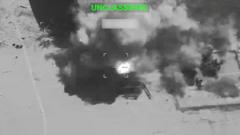
According to defense officials, the latest wave of US airstrikes targeted command-and-control centers, drone storage facilities, and ammunition depots linked to Iran’s Islamic Revolutionary Guard Corps (IRGC) and its proxy militias across the region. The Pentagon defended the operations as necessary, proportionate measures designed to degrade Iran's capability to launch attacks against US personnel and international shipping lanes. "These precision strikes are a direct response to continued provocations," a senior military official stated, emphasizing that the US will not hesitate to defend its strategic interests in the region.
The Nuclear Threat and Tactical Realities
President Trump’s explicit threat to target Iran’s deeply buried nuclear installations—most notably the Fordow fuel enrichment plant, which is built deep inside a mountain northeast of Qom—represents a dramatic shift in US military posture. Historically, these heavily reinforced bunkers have been deemed highly resilient to conventional airstrikes. Military analysts note that targeting such facilities would require specialized munitions:
- GBU-57 Massive Ordnance Penetrator (MOP): The US military's premier 30,000-pound "bunker-buster" bomb, specifically designed to penetrate tens of feet of reinforced concrete and rock.
- Asymmetric Retaliation: Security experts warn that any attempt to strike these sovereign facilities would be viewed by Tehran as an act of war, likely triggering a cascade of retaliatory attacks across the Persian Gulf, targeting oil infrastructure and international shipping.
The escalating rhetoric has drawn sharp concern from international allies and non-proliferation advocates, who urge diplomatic restraint. Tehran has condemned the US actions as flagrant violations of international law, asserting its right to self-defense while maintaining that its nuclear program remains strictly peaceful. With backchannel diplomatic avenues currently strained, international observers fear that the continuous cycle of retaliatory strikes and aggressive posturing could lead to a severe miscalculation, permanently destabilizing the fragile security architecture of the Middle East.