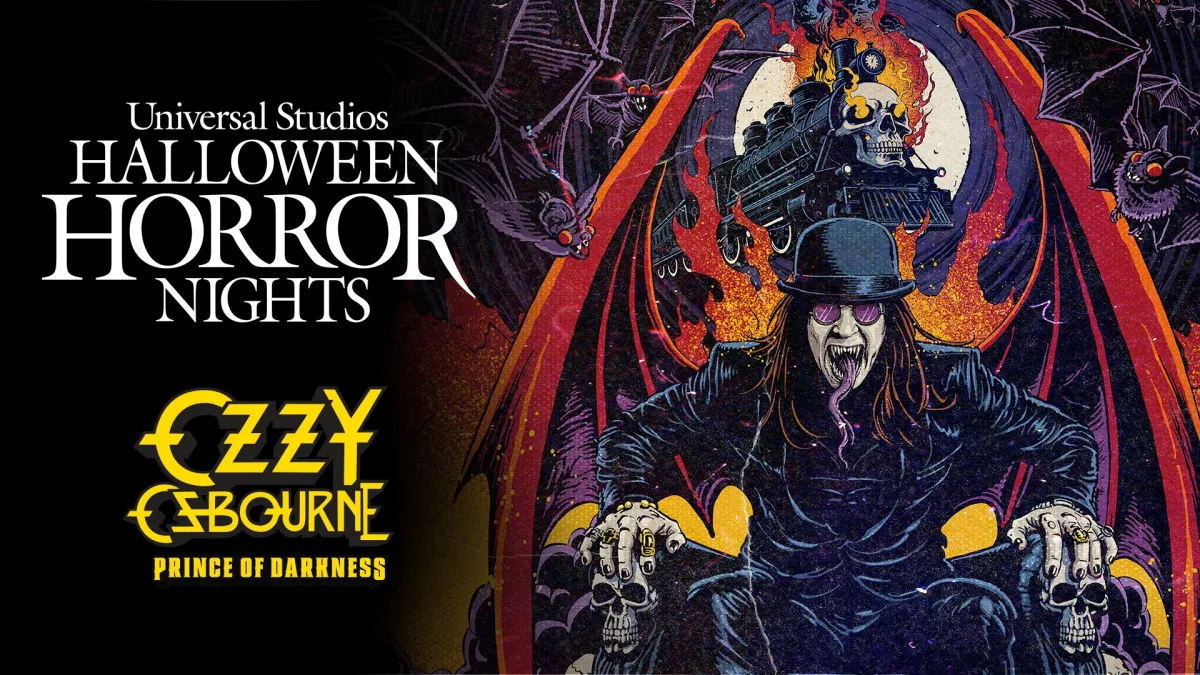
The Afterlife of the Prince of Darkness: Ozzy Osbourne’s Gothic Canonization
There is a peculiar, neon-soaked alchemy in how we choose to remember our cultural transgressors. One year after the mortal departure of Ozzy Osbourne—the heavy metal patriarch who spent half a century courting the demonic and the divine in equal, chaotic measure—his legacy has found its ultimate monument. Universal’s Halloween Horror Nights has announced the impending debut of the "Ozzy Osbourne: Prince of Darkness" haunted houses. It is a fitting, perhaps inevitable, apotheosis for a man who did not merely perform rock ‘n’ roll, but lived it as a grand guignol melodrama. By transforming his sonic universe into a physical labyrinth of terror, the theme-park giant is doing more than staging a seasonal tribute; they are canonizing a brand of British blue-collar gothic that permanently altered the global landscape of shock and spectacle.
To step into the planned attraction is to step into the fractured psyche of a rock iconoclast. Designers promise a multi-sensory descent through the key movements of the Osbourne liturgy—from the rain-slicked, industrial gloom of Birmingham that birthed Black Sabbath, to the drug-fueled, solo-era excesses of "Bark at the Moon" and "Crazy Train." Here, the boundaries between auditory hallucination and physical dread blur. Visitors will navigate environments where heavy metal riffs serve as the soundtrack to nightmares, and where the aesthetic of the occult is laid bare with the high-production theatricality that Universal has perfected. It is an immersive translation of Osbourne's signature artistry: a mixture of genuine, bone-rattling dread and the winking, carnival-barker theatricality that kept him beloved even at his most controversial.
Yet, beneath the fog juice and the simulated gore lies a sharper cultural truth about the nature of modern myth-making. There was a time when Ozzy Osbourne was viewed by the moral arbiters of society as a genuine threat to the republic—a dark prince accused of corrupting youth and desecrating the sacred. To see him posthumously enshrined in a corporate amusement park, situated alongside legacy monsters like Dracula and the Wolf Man, is a testament to how thoroughly time tames the transgressive. What was once feared has become comfortably, exquisitely nostalgic. Universal’s tribute does not sanitize Ozzy’s dark legacy; rather, it understands that the "Prince of Darkness" was always, at his heart, a creature of the theater. In this house of horrors, his shadow looms larger than life, proving that while the man may have succumbed to the quietude of mortality, his nightmares remain delightfully, screamingly immortal.