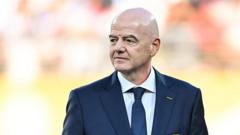
The Zurich Cold War: Inside the Brewing Mutiny Against Gianni Infantino’s Empire
In the gilded, high-stakes theater of global sports diplomacy, Gianni Infantino has long operated with the serene confidence of a sovereign who has successfully redrawn the map. Yet, beneath the polished glass of FIFA's Zurich headquarters, the fault lines of a profound mutiny are hardening. Following a tense assembly on Wednesday in which football’s global governing body predictably rallied behind its embattled president, the European counterpart, UEFA, responded not with the expected acquiescence, but with a cold, calculated dismissal. Declaring that FIFA’s performative show of solidarity "changes nothing," UEFA has signaled that the specter of a historic World Cup boycott remains firmly on the table. It is a high-stakes game of chicken, played out in the dialectic of sterile press releases and backroom whispers, where the ultimate currency is not merely television revenue, but the custody of the world’s game.
The Defection of the Old Guard
The catalyst for this latest escalatory spiral is the sudden, quiet defection of the Football Association. Long criticized for its polite, often toothless diplomacy, England’s FA has executed a rare, sharp turn by formally withdrawing its support for Infantino. This is no mere administrative hiccup; it is a symbolic fracturing of the consensus the FIFA president has spent years cultivating. By aligning itself with the more militant factions within UEFA, the FA has stripped Infantino of the veneer of a universal mandate. For a leader whose tenure has been defined by a relentless, almost messianic drive to expand FIFA's footprint—frequently at the expense of European domestic leagues—the loss of Wembley’s backing is a bruising reminder that the traditional heartlands of the sport still possess the power to disrupt the grandest imperial designs.
> "To whisper the word 'boycott' in the corridors of international sport is to invoke the nuclear option, an existential threat to a multi-billion-dollar ecosystem."
A Clash of Footballing Empires
To invoke the threat of a boycott is to challenge the very illusion of global harmony upon which modern sports entertainment is built. Yet, UEFA's recalcitrance suggests a deeper, systemic exhaustion with Zurich’s unilateralism. Under Infantino, FIFA has increasingly functioned like a corporate behemoth, seeking to colonize the sporting calendar with expanded tournaments and manufactured rivalries. UEFA’s defiance is therefore less a dry dispute over governance and more a cultural counter-offensive. It is an assertion by Europe's footballing aristocracy that while FIFA may own the trademark to the World Cup, Europe owns the players, the historic clubs, and the cultural gravity that actually commands the world’s attention.
As the dust settles from Wednesday's hollow show of unity, the sport finds itself suspended in a state of cold war. Infantino’s allies may believe they have secured his fiefdom, but the withdrawal of English support and UEFA's unyielding posture suggest that the crown is growing heavy. The coming months will test whether this rebellion is a genuine crusade for the democratic integrity of the sport or merely a tactical maneuver to renegotiate the division of spoils. What is certain, however, is that the era of quiet compliance is over; in this clash of empires, the next whistle blown may well signal a fracturing of the global game.