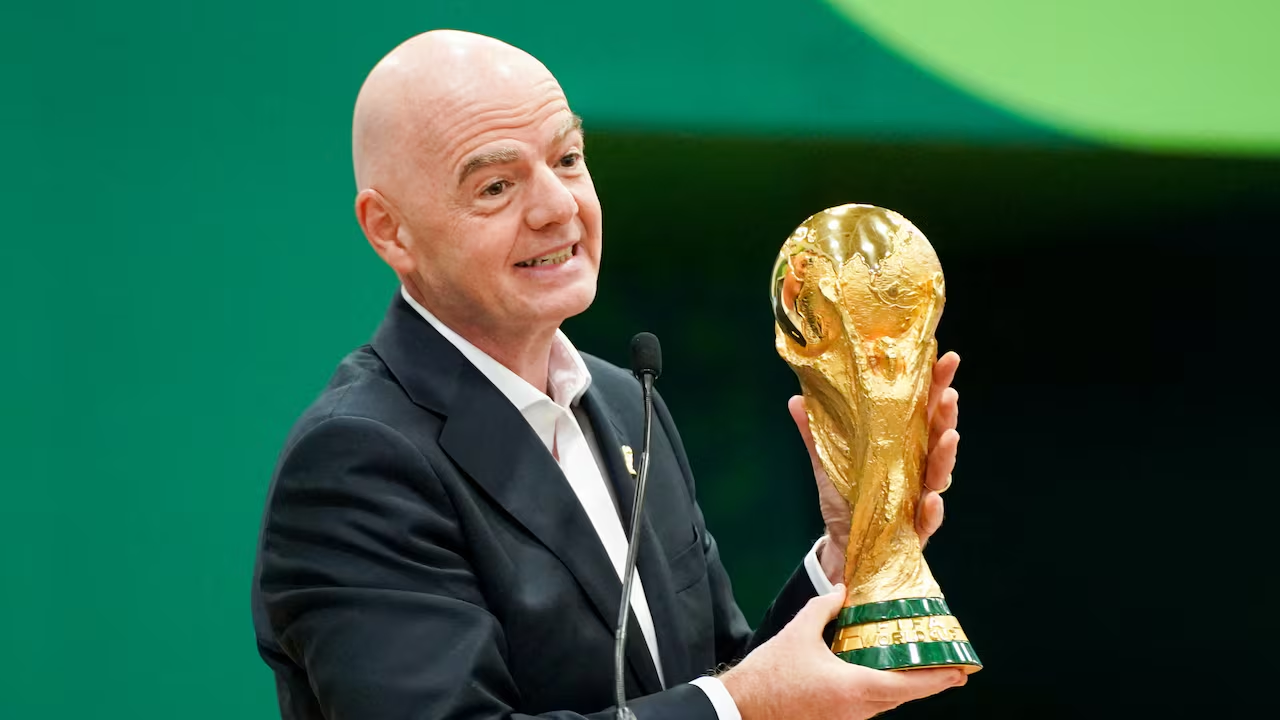
The Broken Covenant: Why European Football Has Turned on Gianni Infantino
A decade ago, Gianni Infantino emerged from the sterile bureaucratic wings of European football, presenting himself as the clean-cut technocrat destined to scrub the grease off FIFA’s tarnished, gilded palace. He was the surrogate savior, elevated to the presidency in the wake of the spectacular, ignominious collapse of the Sepp Blatter regime on a promise of transparency, modernization, and structural reform. Today, the very institution that birthed his rise has declared the transformation a mirage. In a stinging indictment that lays bare the fractured geopolitics of global sport, UEFA has formally announced a total loss of confidence in Infantino, accusing him of a systematic failure to deliver on the fundamental promises that defined his ascension. What began ten years ago as a partnership of convenience has degenerated into an open ideological civil war.
To observe Infantino’s tenure is to witness a masterclass in political metamorphosis. The man who once drew up European tournament brackets with mundane, smiling efficiency has evolved into a globetrotting sovereign, expanding the World Cup, flirting with biennial tournament cycles, and shifting FIFA’s center of gravity away from its traditional European heartland to cultivate a loyal, global voting bloc. By declaring that Infantino has "failed to deliver," UEFA is not merely complaining about administrative drift; they are reacting to a perceived betrayal of the European model. It is the classic tragedy of the surrogate turned usurper: the creature created to stabilize the old empire has instead built a rival autocracy of his own design, leaving his erstwhile creators freezing on the periphery of his new world order.
This public rupture is emblematic of a deeper, more existential struggle over the soul—and the staggering balance sheet—of global football. Under Infantino, FIFA has increasingly operated not as a custodian of a sport, but as an expansionist nation-state, relentlessly chasing Middle Eastern capital, North American markets, and a hyper-commercialized future that threatens to cannibalize the domestic leagues UEFA guards so fiercely. As the diplomatic ties between Nyon and Zurich fray beyond repair, the beautiful game finds itself trapped in a familiar, exhausting cycle: a gilded theater where the rhetoric of reform is periodically weaponized, only to reveal the raw, insatiable pursuit of power underneath.