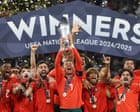
In the gilded, hermetically sealed corridors of international football’s governing elite, power is rarely surrendered; it must be systematically dismantled. The latest, and perhaps most audacious, attempt to rewrite the sport’s geopolitical architecture has begun in earnest, as UEFA and Concacaf enter advanced discussions to launch a massive, joint biennial Nations League tournament. According to sources close to the negotiations, this transatlantic alliance—comprising all 96 member nations from Europe and the North, Central American, and Caribbean regions—is slated for a potential debut as early as 2028. Ostensibly a grand sporting spectacle designed to bridge hemispheres, the proposed tournament is, in truth, an elegant act of corporate mutiny. It represents a direct, coordinated counter-offensive against FIFA President Gianni Infantino, whose hyper-monetized, centralized vision for the global game has alienated the sport’s most powerful stakeholders.
For years, Infantino has ruled from Zurich with the air of an empire-builder, seeking to maximize profits through expanded formats and controversial private-equity overtures—most notably the widely criticized "sell-off" proposals of FIFA's crown jewels. But in pushing his agenda, the FIFA chief may have committed the ultimate bureaucratic sin: uniting his two wealthiest vassals against him. The nascent alliance between UEFA, the custodian of Europe's heritage-rich leagues, and Concacaf, the guardian of the hyper-lucrative North American market, was forged in the heat of a shared mission to orchestrate Infantino’s eventual ouster. By constructing a 96-team behemoth that effectively monopolizes the international calendar in the fallow years between World Cups, the rebel confederations are executing a classic pincer movement. They are bypassing Zurich altogether, starving FIFA of its monopoly on global spectacle while retaining the staggering broadcast and commercial revenues for themselves.
The mechanics of the proposed tournament are as strategically brilliant as they are logistically daunting. Launching in the slipstream of the 2028 European Championship, the event would merge the high-octane drama of European national teams with the burgeoning, commercial powerhouse of a post-2026 World Cup North America. For UEFA, it provides a vital infusion of fresh competitive narratives to stave off the threat of viewer fatigue; for Concacaf, it offers their elite sides—most notably the United States and Mexico—the crucible of regular competitive matches against world-class European opposition. This is not merely an expansion of the sporting calendar; it is an ideological secession. By building an alternative orbit of power, UEFA and Concacaf are proving that in modern football, the true seat of sovereignty lies not with the governing body that claims the world, but with the confederations that own the stage.