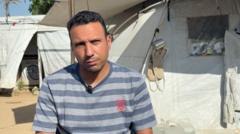
Bureaucratic Delays and Closed Borders Leave Gaza's Critically Ill Facing Fatal Waits
The collapse of Gaza’s medical infrastructure has left thousands of critically ill and injured Palestinians stranded in a bureaucratic limbo, with devastating consequences. According to Gaza's health ministry, an estimated 300 patients who had been officially referred for urgent medical treatment abroad have died while waiting for evacuation permits since the breakdown of border coordination and crossings. The figure underscores a worsening humanitarian crisis where the lack of advanced medical supplies, electricity, and specialized physicians inside the enclave has turned treatable conditions into terminal diagnoses.
For many families, the authorization to leave arrives far too late. "Two weeks after her death, I finally got the call saying her evacuation had been approved," one relative shared, recounting the agonizing wait for a young oncology patient whose condition deteriorated rapidly while awaiting travel clearance. Since the closure of the vital Rafah crossing in May and the subsequent tightening of alternative exit routes, the process for securing medical passage through international mediators and state agencies has slowed to a crawl. Patients requiring complex surgeries, specialized pediatric care, or advanced cancer therapies are left to navigate a complex web of security screenings and shifting diplomatic conditions.
International humanitarian organizations, including the World Health Organization (WHO), have repeatedly sounded the alarm over the virtual halt of medical evacuations. Gaza’s remaining hospitals, severely damaged by months of conflict and operating under drastic resource constraints, are entirely unequipped to handle long-term or highly specialized medical cases. While Israeli authorities maintain that rigorous security screenings are necessary to prevent the transit of militant operatives, aid agencies argue that the vetting process is excessively slow and lacks transparency. Out of the thousands of patients registered for urgent medical transfer, only a small fraction have successfully crossed into receiving countries such as Egypt, Qatar, or the United Arab Emirates.
The humanitarian impasse highlights the broader systemic collapse of the enclave’s healthcare network, where even basic life-saving interventions are now scarce. With diplomatic negotiations struggling to establish permanent, reliable medical corridors, healthcare workers on the ground warn that the preventable death toll among those awaiting transfer will continue to climb. For the families of the sick, each day of political and administrative deadlock represents an agonizing countdown, where bureaucratic delays increasingly carry the weight of a death sentence.