The Ash on the Aegean: Tragedy in Crete as Southern Europe Burns Again
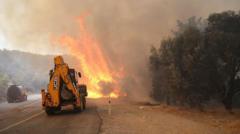
The Mediterranean summer, once a gilded promise of leisure and azure waters, has increasingly transformed into a theater of ecological reckoning. This week, the idyllic topography of Crete became a crucible. Amidst the parched olive groves and ancient terraces of Greece’s largest island, two firefighters lost their lives battling a ferocious blaze—their deaths a stark, tragic testament to a continent increasingly under siege by its own climate. Driven by gale-force winds that turned localized embers into fast-moving firestorms, the conflagrations forced the desperate evacuation of several historic villages, leaving behind a landscape choked with ash and the bitter realization that the margins of safety in Southern Europe are rapidly evaporating.
It is a grimly familiar choreography of disaster, where the natural elements have been weaponized by a changing atmosphere. The winds—capricious, relentless, and reaching gale force—acted as a bellows, whipping sparks into towering walls of flame that defied conventional containment. This is no longer a seasonal aberration, but the manifestation of a drier, hotter normal. From the scrublands of Iberia to the islands of the Aegean, firefighting crews find themselves engaged in an asymmetric warfare against an element fueled by prolonged droughts. The evacuation of these Cretan villages is not merely an emergency protocol; it is a displacement of heritage, as communities that have survived centuries are rendered uninhabitable in a matter of hours by a landscape turned hostile.
> "The firefighter has become the tragic sentinel of the Anthropocene, tasked with holding back the tide of an angry biosphere with tools designed for a gentler era."
The loss of the two first responders elevates this crisis from an ecological ledger to a profound human tragedy. In Europe’s collective imagination, these responders have become the frontline soldiers of a new kind of war. As smoke plumes drift across the Mediterranean, blurring the borders between nations and turning pristine tourist skies a bruised, apocalyptic orange, a palpable sense of exhaustion has settled over the region. The tourist-dependent economies of Southern Europe now exist in a state of suspended apprehension, recognizing that the very warmth that draws millions to their shores has curdled into a destructive force, threatening not only the economy, but the foundational viability of life on the continent's southern edge.