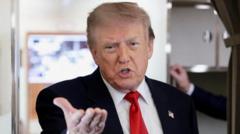
Trump Signals Potential Breakthrough in Iran Standoff Amid Denials of Direct Talks
United States President Donald Trump has indicated that behind-the-scenes discussions aimed at defusing regional tensions are underway with Iran, describing a temporary lull in military hostilities as an opportune window for diplomacy. Speaking to reporters, President Trump expressed cautious optimism about a diplomatic breakthrough, stating "there is a good chance that something could happen" regarding high-level negotiations. However, the assertion was swiftly met with pushback from Tehran, as Iranian officials flatly denied that any direct talks between the two adversarial nations are currently taking place.
The developments follow months of escalating friction in the Persian Gulf, characterized by a series of military provocations, including the downing of unmanned surveillance drones, mysterious attacks on commercial oil tankers, and retaliatory airstrikes. This volatile environment has kept the international community on high alert over the potential for an all-out regional conflict. The current "lull" in active kinetic exchanges has provided a brief diplomatic opening, which Washington appears eager to exploit. Geopolitical analysts suggest that any discussions, if they are occurring, are likely being brokered through third-party intermediaries—such as Switzerland, Oman, or France—explaining the discrepancy between the two nations' public statements.
For its part, Iran has consistently maintained a public stance of non-engagement as long as heavy economic sanctions remain in place. Following the Trump administration's unilateral withdrawal from the 2015 Joint Comprehensive Plan of Action (JCPOA) in 2018, Washington has pursued a "maximum pressure" campaign designed to force Tehran to negotiate a more restrictive deal. Iranian leadership has repeatedly declared that negotiations under the duress of economic warfare are a non-starter, demanding the lifting of sanctions as a prerequisite for any formal diplomatic dialogue.
As both sides navigate this delicate geopolitical standoff, the prospect of an unintended escalation remains a significant concern for international observers. While President Trump's rhetoric hints at a preference for a diplomatic agreement over military confrontation, the path to a formal resolution remains highly fraught. Observers note that without a mutually agreed-upon framework or a compromise on sanctions relief, the current pause in hostilities may prove temporary, leaving the threat of renewed conflict hanging over the Middle East.