The Arsenal of Paranoia: Inside the Hunt for Washington’s Weapons Leakers
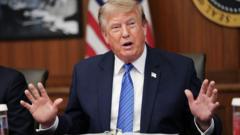
In the theater of American hegemony, perception is policed as strictly as the perimeter. Faced with whispering anxieties that the nation’s formidable arsenal is running dangerously dry, Donald Trump has responded with his characteristic blend of fierce denial and retaliatory bravado. Dismissing reports of a domestic weapons shortage as mere fabrication, the President has redirected the spotlight from the dry logistics of munitions to the intimate betrayal of the state, declaring a high-stakes campaign to "hunt down" the national security leakers responsible for broadcasting these vulnerabilities. Yet, behind the performative steel of Washington’s assurances lies a more stubborn, mathematical reality: a defense industrial base groaning under the weight of protracted global commitments and the hyper-complex, agonizingly slow manufacturing timelines of modern warfare.
The Ledger of Depletion
While the precise ledgers of the Pentagon’s stockpiles remain cloaked in the absolute sanctuary of military classification, the breadcrumbs left in public registries and defense appropriations paint a far more anxious picture. Analysts and open-source intelligence suggest that the relentless pipeline of military aid sent to foreign theaters has severely cannibalized domestic reserves of difficult-to-manufacture weaponry. These are not the simple iron bombs of the twentieth century, but exquisite, high-tech systems—precision-guided missiles, advanced air defense interceptors, and sophisticated artillery—that cannot simply be stamped out of a resurrected Rust Belt assembly line. To admit to a deficit in these sovereign reserves is to acknowledge a crack in the imperial armor, an existential vulnerability that the administration seems desperate to plaster over with aggressive rhetoric.
> "We don't have a shortage, but we do have a betrayal."
The Alchemy of Retribution
The hunt for the "leakers" thus serves as both a shield and a distraction, transforming a dry, systemic crisis of industrial capacity into a gripping narrative of domestic treachery. By reframing the conversation from a question of defense readiness (Do we have enough missiles?) to a drama of loyalty (Who is betraying the republic?), the administration attempts to preserve the illusion of American invincibility. It is a classic exercise in political alchemy: converting the structural frictions of a post-industrial superpower into a hunt for saboteurs, even as the quiet, empty spaces in the nation's strategic silos await a supply chain that can no longer keep pace with the speed of global conflict.