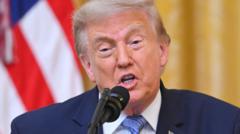
WASHINGTON — Former U.S. President Donald Trump has reignited the national debate over election integrity by publicly alleging that China actively meddled in the 2020 presidential election. Speaking to supporters ahead of the upcoming midterm elections, Trump also cast doubt on the security of the looming vote, suggesting that systemic vulnerabilities remain unaddressed. The assertions have drawn swift, sharp condemnation from Beijing, which labeled the accusations entirely fabricated, as well as from domestic critics who argue the rhetoric is a calculated political move to pre-emptively delegitimize future electoral outcomes.
In response to the allegations, China’s Ministry of Foreign Affairs firmly rejected Trump's narrative, emphasizing that Beijing adheres strictly to a policy of non-interference in the domestic affairs of other nations. A Chinese state spokesperson characterized the claims as "completely groundless" and accused U.S. politicians of using China as a scapegoat to distract from domestic political divisions. While U.S. intelligence agencies have previously warned of foreign influence campaigns from adversaries including Russia, China, and Iran, official post-election assessments by the Cybersecurity and Infrastructure Security Agency (CISA) concluded that the 2020 election was the "most secure in American history," finding no evidence that any foreign power altered vote counts or compromised the technical voting infrastructure.
Domestic Backlash and Political Strategy
Domestically, prominent Democratic lawmakers and election security advocates have warned that Trump’s remarks are part of a broader, ongoing effort to erode public trust in democratic institutions. Critics argue that by questioning the integrity of the upcoming midterms before ballots are even cast, the former president is laying the groundwork to contest any potential losses suffered by his endorsed candidates.
"This is a familiar playbook designed to undermine faith in our democratic process," a senior Democratic strategist said. "By sowing doubt early, it creates a ready-made narrative to reject any unfavorable election results."
A Polarized Electoral Landscape
As the midterm campaigns enter their final stretch, the debate over voting security continues to deeply polarize the American electorate. The key issues shaping this debate include:
- Legislative Overhauls: Numerous conservative-led states have passed new voting laws aimed at tightening identification requirements and restricting mail-in ballots, citing the need to prevent potential fraud and restore public confidence.
- Voter Access: Voting rights advocates and Democrats argue these measures disproportionately disenfranchise minority communities and make casting a ballot unnecessarily difficult.
- Security and Safety: Local election administrators nationwide have reported unprecedented levels of harassment, leading to concerns over a shortage of poll workers and heightened security at tabulation centers.
Against this backdrop of heightened political tension, the ongoing discourse surrounding foreign meddling and systemic vulnerabilities ensures that the legitimacy of the upcoming vote will remain a central, highly contested issue long after the final ballots are counted.