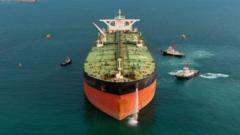
Echoes of the Tanker War: The Fragile Arteries of Global Energy
For decades, the global shipping industry operated on a collective fantasy of frictionless transit—a belief that the vast, lumbering steel vessels carrying the world’s lifeblood could slide seamlessly through the map’s narrowest capillaries. Today, that illusion is dissolving in the volatile waters of the Middle East. Security analysts warn that the threat to oil tankers in the region has reached its most perilous zenith since the notorious "Tanker War" of the 1980s, an era when the Persian Gulf became a smoky graveyard of charred hulls and burning crude. Now, a dizzying array of asymmetrical threats, from state-backed drone swarms to precision-guided missiles launched from rugged coastlines, has turned vital choke points like the Bab el-Mandeb strait and the Red Sea into arenas of high-stakes roulette for global commerce.
What makes the current crisis particularly insidious is its shapeshifting complexity. It is no longer a symmetrical conflict between sovereign navies, but a fragmented, techno-guerrilla campaign where inexpensive, off-the-shelf weaponry can paralyze multi-million-dollar maritime operations. As shipping conglomerates frantically reroute their fleets around the Cape of Good Hope, they are discovering that avoidance carries its own heavy tax: astronomical insurance premiums, strained supply chains, and a staggering surge in fuel costs. The "alternative routes" once deemed safe havens are rapidly becoming congested corridors of vulnerability, proving that in a hyper-connected world, there are no true hiding places from geopolitical friction.
> "The illusion of secure ocean highways has been shattered. We are looking at a paradigm shift where non-state actors can effectively blockade the world's most vital energy arteries with fraction-of-the-cost technology."
Ultimately, the creeping anarchy on the high seas exposes a deeper, more structural rot in the international order. The maritime architecture that long guaranteed the freedom of navigation is showing its age, strained by the rise of revisionist regional powers and proxy factions willing to weaponize the global commons. As analysts peer into the murky future of these contested sea lanes, the prognosis remains sobering. The tankers currently navigating these waters are not just transporting Brent crude; they are carrying the fragile weight of an unraveling geopolitical consensus, where the line between uninterrupted commerce and economic paralysis is now as thin as a ship's hull.