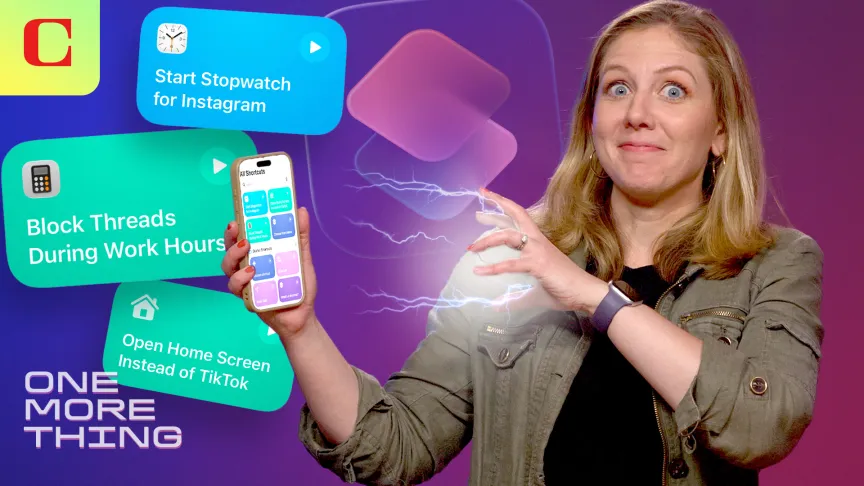
The Friction Engine: How Elegant Self-Sabotage Cured My Infinite Scroll
To exist in the late-digital epoch is to participate in a silent, twitchy liturgy: the involuntary swipe, the glassy-eyed gaze, the thumb-flick that refreshes a feed already teeming with nothingness. We are a culture domesticated by our interfaces, conditioned to seek salvation in the infinite scroll. For years, the prescribed remedy for this digital malaise has been a kind of puritanical abstinence—the sanctimonious deletion of the offending apps, a retreat to the barren landscape of a dumbphone. But such binary choices lack texture. They demand that we surrender our modern citizenship rather than negotiate its terms. To delete the sirens of social media is to admit defeat to the machine; it is far more satisfying, and infinitely more elegant, to outmaneuver them.
Enter the curious alchemy of the iOS 27 Shortcut—a tool designed for efficiency that has been ingeniously weaponized to introduce friction. The premise of this digital self-sabotage is wonderfully counterintuitive. Rather than blocking access to addictive platforms with the cold, authoritarian hand of a screen-time limit, the customized shortcut acts as a subtle psychological speed bump. Upon tapping the icon of a designated distraction, the operating system does not open the app; instead, it executes a choreographed sequence of micro-interventions. It might shift the screen’s vibrant palette to a lifeless, clinical grayscale, launch a three-second timer requiring a conscious breath, or present a prompt asking, with devastating simplicity: What are you looking for?
```
"To delete the sirens of social media is to admit defeat to the machine; it is far more satisfying to outmaneuver them."
```
This is not a barrier; it is an aesthetic of deliberate hesitation. The genius of the shortcut lies in its understanding of human desire: we do not actually want to scroll forever, we simply lack the cognitive pause required to stop. By automating this pause, the shortcut breaks the Pavlovian loop before the dopamine hit can register. It exposes the muscle memory of modern boredom for what it is—a hollow reflex. Suddenly, the act of checking one's phone is stripped of its frictionless magic and revealed to be a choice, and a rather tedious one at that.
Ultimately, this exercise in structured restraint points to a larger truth about our relationship with technology. We do not need to exile ourselves to a neo-Luddite wilderness to reclaim our attention. Instead, we must learn to design our own boundaries within the silicon cages we inhabit. By utilizing iOS 27 to build custom roadblocks, we reclaim a measure of agency. We transform our devices from predatory engines of engagement into spaces where we might once again choose when to look away, preserving both our sanity and our sophistication.