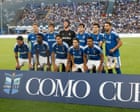
The Price of Paradise: Como’s Draconian New Stadium Policy Sparks a Rebellion on the Lake
On the sun-dappled shores of Lake Como, where the water mirrors the quiet retreats of the global plutocracy, football has traditionally existed as a gritty, localized antidote to the surrounding opulence. Yet, following a fairy-tale ascent that saw the club, coached by former Arsenal icon Cesc Fàbregas, secure an unprecedented Champions League berth, a cold wind of modern corporate logic has swept through the historic Stadio Giuseppe Sinigaglia. The club’s administration has ignited a fierce ideological civil war with its loyal fanbase by introducing a draconian new code of conduct. Chief among these dictates is a policy that treats loyalty not as a reciprocal passion, but as a strictly monitored contract: supporters who fail to attend more than three home matches in a season—without providing what the club deems a "valid reason"—will have their season tickets summarily revoked.
This brand of administrative vigilance, which also includes a strict ban on opposition colors and scarves outside the designated away section, transforms the stadium from a temple of communal catharsis into an arena of transactional optimization. The club’s leadership has defended the rules as a necessary modernization, aiming to guarantee a roaring, visually uniform crowd for the global television cameras that now broadcast Como’s picturesque home to the world. But to the local tifosi, the measures feel less like optimization and more like a gentrifying eviction notice. Under this new mercantile regime, the fan is no longer a patron possessing the sovereign right to occasional absence; they are an asset whose utility must be maximized—a physical extra expected to perform on cue or be replaced by a more compliant consumer waiting in the wings.
> "They are terrified. Under this new regime, the fan is no longer a patron possessing the sovereign right to occasional absence; they are an asset whose utility must be maximized."
Indeed, the existential dread running through the stands of the Sinigaglia is a microcosm of a larger, global anxiety within the sport. Italian football, long characterized by its chaotic, fiercely tribal, and deeply human character, is being systematically ironed out by the demands of international brand-building. By criminalizing the empty seat and sanitizing the terraces of rival colors, Como’s ownership is chasing a hyper-curated, Disneyfied aesthetic that appeals to tourists and tech-billionaire neighbors but alienates the working-class community that sustained the club through the purgatory of the lower divisions. In Fàbregas, they have a manager who understands the fluid, expressive beauty of the game; it is a profound irony that the club's executives are employing a rigid, panoptic control that threatens to extinguish the very soul of the stadium in order to sell its image.