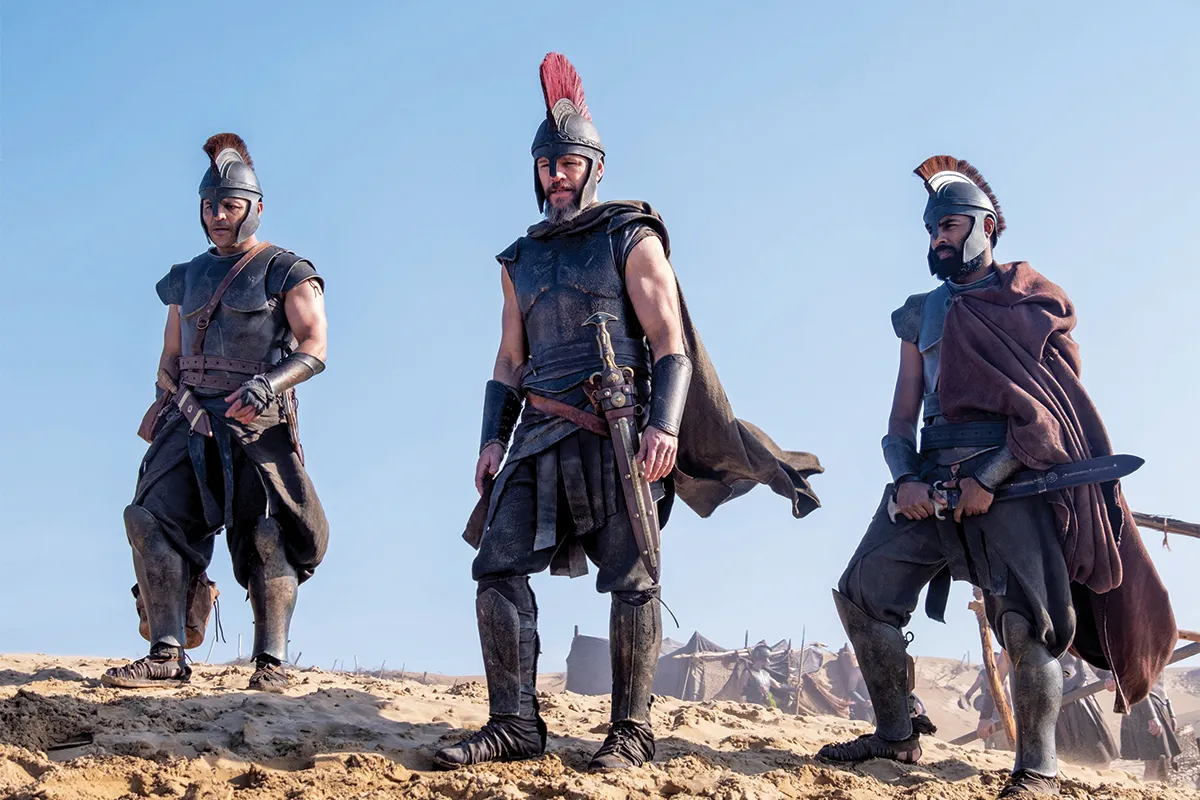
A Cinematic Homecoming: How Christopher Nolan’s ‘The Odyssey’ Rewrote the Rules of the Box Office Blockbuster
Steering past the sirens of franchise fatigue and the hyper-meta, self-referential comedic monoliths of modern Hollywood, Christopher Nolan’s The Odyssey has claimed the ultimate crown of cinematic endurance. In a box office voyage that mirrors the epic resilience of its titular hero, Nolan’s sweeping, uncompromising classical adaptation has officially become the highest-grossing R-rated film of all time. Amassing an astonishing $1.352 billion worldwide, the auteur’s maritime fever dream has quietly nudged past the previous record-holder, Disney’s irreverent juggernaut Deadpool & Wolverine, which concluded its theatrical run at a formidable $1.338 billion. It is a seismic shift in the cultural landscape, signaling that global audiences are not merely seeking escapist dopamine loops, but are hungry for grand-scale, intellectually demanding myth-making.
When The Odyssey first made landfall in theaters on July 17, opening to a thunderous $123 million domestic weekend, critics and industry analysts wondered if a three-hour, somber, and visceral reimagining of Homeric antiquity could sustain its momentum. Historically, an R-rating was viewed by studio executives as a financial straitjacket, limiting the teenage demographic essential for cross-generational blockbusters. Yet Nolan, armed with his signature temporal playfulness, IMAX-engineered dread, and a deeply humanistic approach to grief and survival, turned those restrictions into a virtue. The film’s R-rating was not utilized for cheap, sensationalized shock value, but to depict the harrowing, psychological cost of war, the seductive terror of the underworld, and the brutal weight of a decade-long journey home.
> "Nolan has proved that the modern multiplex can still be a cathedral for high art, where classical gravity carries more weight than corporate synergy."
This historic triumph marks a profound vindication for original—or at least non-comic-book—storytelling at a scale rarely afforded to contemporary directors. For years, the peak of the global box office was guarded by capes, spandex, and nostalgic intellectual property designed for mass toy-shelf consumption. By eclipsing the meta-farcical universe of Deadpool & Wolverine, The Odyssey represents a changing of the guard. It suggests that the theatrical experience is most potent when it challenges the senses rather than flattering the audience's familiarity with internet memes and cameos. Nolan’s triumph is a reminder that the oldest story in Western literature, when wielded by a master technician of the medium, remains the most gripping journey of them all.