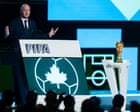
The Feudal Court of Zurich: Can Infantino Survive the Great Football Sell-Off?
Gianni Infantino has long operated less as a traditional sports administrator and more as an itinerant monarch of a borderless, cash-rich empire. His reign, which originally promised a technocratic cleansing of the scandal-plagued Sepp Blatter era, has instead settled into a familiar rhythm of high-stakes financial opportunism and geopolitical pivot-shifting. The current tremor shaking FIFA’s Zurich headquarters—sparked by a widely derided, aggressively monetized plan to sell off and restructure the global football calendar—represents more than a mere policy dispute. It is a crisis of faith in the imperial court. By attempting to carve up and commodify the game’s crown jewels to the highest private bidders, Infantino has exposed the fragile architecture of his coalition, transforming what was once a quiet consensus of self-interest into a high-stakes parlor game of survival.
In the Byzantine corridors of the "FIFA family," loyalty is a highly liquid currency, and the six continental confederations are behaving increasingly like restless feudal baronies. At the vanguard of the current insurrection is UEFA. The wealthy European governing body has long viewed Infantino’s globalist overreach—particularly his overtures to sovereign wealth funds and his plans for expanded, year-round tournaments—with a mixture of aristocratic disdain and existential dread. For Europe, the threat of an oversaturated calendar is an direct encroachment on the lucrative supremacy of the Champions League and domestic divisions. Yet, Infantino’s political genius has always lain in his ability to bypass European resistance by cultivating the global peripheries. In Africa (CAF) and Asia (AFC), where FIFA developmental grants function as the literal lifeblood of local associations, the president has historically been viewed not as a rapacious corporatist, but as a benevolent patron. Whether these regions will remain steadfast in the face of European mutiny depends entirely on whether Infantino's promises of trickle-down gold can survive mounting legal challenges and sponsor fatigue.
```
"In the sterile suites where football’s fate is decided, morality is merely a negotiating tactic."
```
Across the Atlantic, the calculus shifts from ideological warfare to raw pragmatism. South America’s CONMEBOL, historically romantic but financially precarious, oscillates between defending its rich heritage and chasing the hard cash promised by FIFA's new frontiers. Meanwhile, CONCACAF, with its eyes fixed on the lucrative horizon of North American commercial expansion, remains a cautious, transactional observer. This fragmentation of interests reveals the central paradox of the anti-Infantino movement: while dissatisfaction with his mercenary agenda is palpable, the mechanism to actually depose him remains rusted shut. To mount a credible electoral challenge requires more than just outrage; it requires a unifying candidate capable of bridging the chasm between Europe's wealthy elite leagues and the cash-strapped federations of the Global South—a figure who has yet to emerge from the sterile ecosystem of modern sports governance.
Ultimately, the drama currently unfolding is less a democratic awakening than a tense renegotiation of feudal terms. Infantino’s "sell-off" may have alienated those who still harbor romantic notions of the beautiful game, but in the air-conditioned boardrooms where the sport’s true power resides, ethics are rarely a priority. If the president is to fall, it will not be because of a sudden moral epiphany among the confederations, but because his promises of endless financial growth have finally collided with the physical limits of the players and the patience of the public. Until a viable alternative presents itself, the FIFA family remains a fractious, resentful clan—bound together not by affection, but by the terrifying realization that they cannot live with their patriarch, and cannot yet afford to live without him.