The Silent Horizon: Ridley Scott’s ‘The Dog Stars’ and the Weight of Elegiac Dystopia
In an era where the cinematic apocalypse has been thoroughly strip-mined for kinetic violence and pyrotechnic despair, the prospect of a quiet end to the world carries a rare, almost subversive promise. With The Dog Stars, director Ridley Scott pivots from the muscular, historical maximalism that has defined his late-career renaissance to mount a pastoral elegy—an adaptation of Peter Heller’s celebrated post-pandemic novel. The film exchanges the neon-drenched cyber-punk of Scott's past for the sweeping, desolate grandeur of a depopulated American West. Yet, as this beautiful but strangely inert adaptation reveals, there is a delicate line between a narrative of profound, meditative stillness and one that simply stalls in the doldrums of its own solemnity.
```
"The film exists in a state of suspended animation, beautiful to behold but gasping for the oxygen of genuine dramatic tension."
```
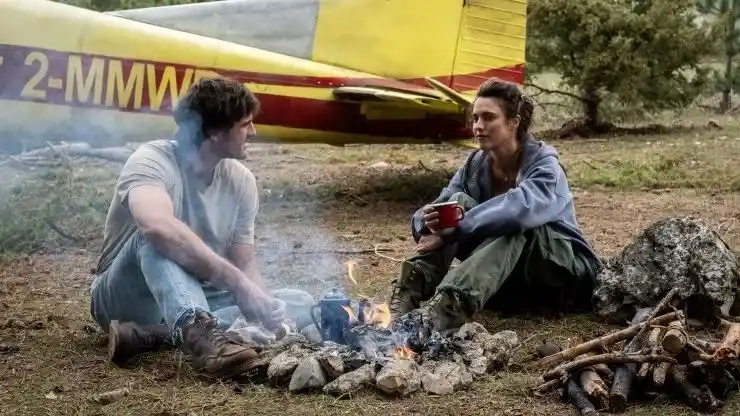
At the center of this gorgeous ruin is Jacob Elordi, an actor rapidly translating his imposing physical presence and brooding gravitas into the currency of a classic Hollywood leading man. Playing Hig, a pilot grieving a world erased by a flu pandemic, Elordi sheds the varnished, manipulative charisma of his recent roles to embody a quiet, bone-deep weariness. Alongside him, Margaret Qualley provides a spark of mercurial, brittle energy as a fellow survivor. Qualley’s performance is a masterclass in nervous vitality; she moves through Scott’s wide, amber-hued frames like an exposed nerve. Together, they represent the film’s strongest asset—a pair of magnetic, fiercely contemporary actors attempting to breathe visceral warmth into a landscape frozen by tragedy.
Yet, the primary friction of The Dog Stars lies in the collision between Scott’s instincts as a visual world-builder and the stubbornly interior nature of the source material. Where Heller’s prose relies on a fragmented, poetic stream-of-consciousness to depict Hig's loneliness, Scott defaults to sublime, static tableaus that prioritize scale over intimacy. The vast, empty runways and silent mountain peaks are captured with breathtaking clarity, but the film frequently mistakes atmosphere for narrative momentum. Even as Elordi and Qualley search for a fragile, redemptive connection in the ashes, they are ultimately marooned by a script that struggles to translate the existential ache of survival into compelling drama. The result is a film that exists in a state of suspended animation, beautiful to behold but gasping for the oxygen of genuine dramatic tension.