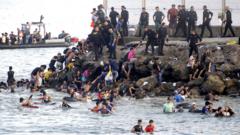
The Fractured Border: How 60,000 Souls in Ceuta Shook the Foundations of Schengen
In the sun-bleached, razor-wire-fringed Spanish enclave of Ceuta, where the African continent presses directly against the lip of Europe, the border is less a line on a map than a high-stakes theater of human desperation and geopolitical anxiety. Over a tumultuous span of days, this fragile frontier buckled under the weight of some 60,000 migrants crossing from Morocco—a human tide of unprecedented scale that quickly transformed a localized emergency into a continental crisis. By Friday evening, Madrid claimed a semblance of order had been restored, with the vast majority of the arrivals summarily processed and returned across the Moroccan border. Yet the physical retreat of the crowds did little to quiet the political tempest left in their wake, exposing once more the volatile, transactional dynamics of Mediterranean migration.
Addressing a rattled nation, Spanish Prime Minister Pedro Sánchez moved swiftly to control the narrative, casting the crisis not as a failure of statecraft or border diplomacy, but as the handiwork of predatory criminal networks. He laid the blame squarely at the feet of human traffickers, accusing these shadow syndicates of exploiting the vulnerabilities of thousands for mercenary gain. While such rhetoric provides a morally uncomplicated villain, it conveniently glosses over the deeper, more uncomfortable realities: the systemic economic despair of the Global South, the volatile leverage wielded by Moroccan authorities, and Europe’s chronic inability to formulate a cohesive asylum policy. By framing the crisis as a battle against organized crime, Madrid sought to project sovereign strength, even as the images of chaotic arrivals suggested a state temporarily caught flat-footed.
> "The crisis at Ceuta is a stark reminder that borders are not static barriers but dynamic, highly sensitive barometers of global inequality."
The geopolitical tremors of the event were felt most acutely in Rome, where Italy's right-leaning government seized upon the chaos in Ceuta to deal a heavy blow to the ideal of European integration. In a swift, retaliatory maneuver, Italy suspended its Schengen agreement on free movement with Spain, effectively re-erecting the national borders that have been dissolved for decades. This dramatic closure is more than just a bureaucratic hurdle; it is a profound symbolic rupture. It signals a growing, impatient isolationism among Southern European states who feel perpetually abandoned on the front lines of migration, viewing Spain’s temporary lapse in border integrity as a direct threat to their own domestic security.
Ultimately, the crisis at Ceuta reveals that the concept of a borderless Europe is an increasingly fragile illusion. While the swift return of tens of thousands to Moroccan soil may offer Madrid a brief political respite, it serves as a mere palliative on a gaping continental wound. Between the desperate aspirations of those seeking a life across the water and the defensive, nationalistic posturing of a divided continent, the Mediterranean remains a stage where humanitarian tragedy and political theater are inextricably, and tragically, bound.