The Quiet Cadence of Deterrence: How Washington’s Transformed Diplomacy Silenced the Drums of War in Seoul
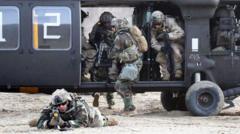
For decades, the vernal equinox on the Korean Peninsula was heralded not merely by the blossoming of cherry trees, but by the thunderous, heavy-metal choreography of joint military exercises. These "war games"—a term of art that always carried a thin veneer of geopolitical menace—were the ironclad liturgy of the Washington-Seoul alliance, designed to signal a sleepless readiness to Pyongyang. Today, however, that thunder has been dialed down to a polite hum. In an unprecedented concession to the shifting winds of transactional diplomacy, South Korea has truncated its joint military drills, explicitly citing a direct request from a White House that seems increasingly eager to swap the expensive logistics of deterrence for the cost-free currency of personal chemistry.
The impetus for this strategic retreat lies not in the sober, sterile corridors of the Pentagon, but in the singular, highly personalized theater of Donald Trump’s foreign policy. Citing a "very good" relationship with North Korean leader Kim Jong Un, the American president has cast the long-standing exercises as both exorbitantly expensive and needlessly provocative—adopting, in a striking rhetorical turn, the very vocabulary long favored by Pyongyang. This is diplomacy recast as a courtship of autocrats, where decades of institutional security structures are casually bartered for the ephemeral warmth of personal letters and summit handshakes. For Seoul, caught in the delicate position of hosting these diminished maneuvers, the request from Washington was an offer that could not be refused, revealing the profound vulnerability of an alliance suddenly subjected to the whims of real-estate-style dealmaking.
> "We are swapping the hard currency of military readiness for the volatile speculation of personal rapport."
Beneath the polished communiqués and the face-saving choreography of the announcement lies a quiet, simmering anxiety among South Korea’s defense establishment. To dismantle or even dilute these exercises is to tinker with the delicate machinery of deterrence that has kept a fragile peace since 1953. While Seoul’s administration has pursued its own cautious detente with the North, the suddenness of the American retreat from these traditional displays of force exposes a deeper, more unsettling geopolitical reality: the "ironclad" nature of the post-war Pacific alliance is now negotiable. In shortening the theater of war, Washington and Seoul are gambling that the absence of provocation will pave the way for denuclearization—a high-stakes wager where the chips are the security of millions, and the dealer is an unpredictable American president whose gaze is already drifting toward the next domestic news cycle.