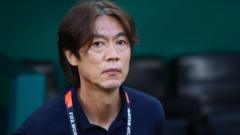
South Korea National Football Coach Resigns Amid Presidential Call for Probe Into World Cup Exit
The head coach of the South Korean national football team has resigned from his position following a disappointing World Cup campaign that culminated in an early group-stage elimination. The manager’s departure comes in the wake of mounting public criticism after South Korea failed to progress to the knockout rounds, ultimately missing out on a spot among the eight best third-placed teams. The sporting disappointment has rapidly escalated into a national political issue, with South Korean President Yoon Suk-yeol calling for a formal government-led investigation into the team’s preparation, management, and financial governance.
President Yoon’s directive has shifted the spotlight from tactical failures on the pitch to systemic issues within the Korea Football Association (KFA). In a statement issued by the presidential office, spokespersons indicated that the Ministry of Culture, Sports and Tourism would conduct a thorough audit into the KFA's administrative decisions, coaching selection processes, and budget allocations. "The national football team represents the pride of our citizens, and the public deserves transparency regarding how national sports resources and funding are managed," the presidential office stated. In his farewell press conference, the outgoing head coach expressed deep regret, stating he took "full responsibility for the tactical shortfalls" and the team's inability to meet national expectations.
This premature tournament exit marks one of South Korea's most frustrating international campaigns in recent history, contrasting sharply with the country's historic status as a powerhouse of Asian football. Local media and fan coalitions have voiced growing anger over what they characterize as administrative complacency and a lack of long-term vision within the KFA. Pressure has also intensified on KFA President Chung Mong-gyu, with critics demanding high-level resignations and comprehensive structural reforms to revitalize the national development pipeline.
As the KFA begins the difficult task of searching for a successor to rebuild the squad, the impending government probe is expected to complicate the transition. Sports analysts have warned that direct political interference could potentially draw sanctions from FIFA, which strictly prohibits government meddling in the independent administration of national football associations. Nonetheless, with crucial continental qualifiers on the horizon, South Korean football authorities face an uphill battle to restore public trust and stabilize a national team in transition.