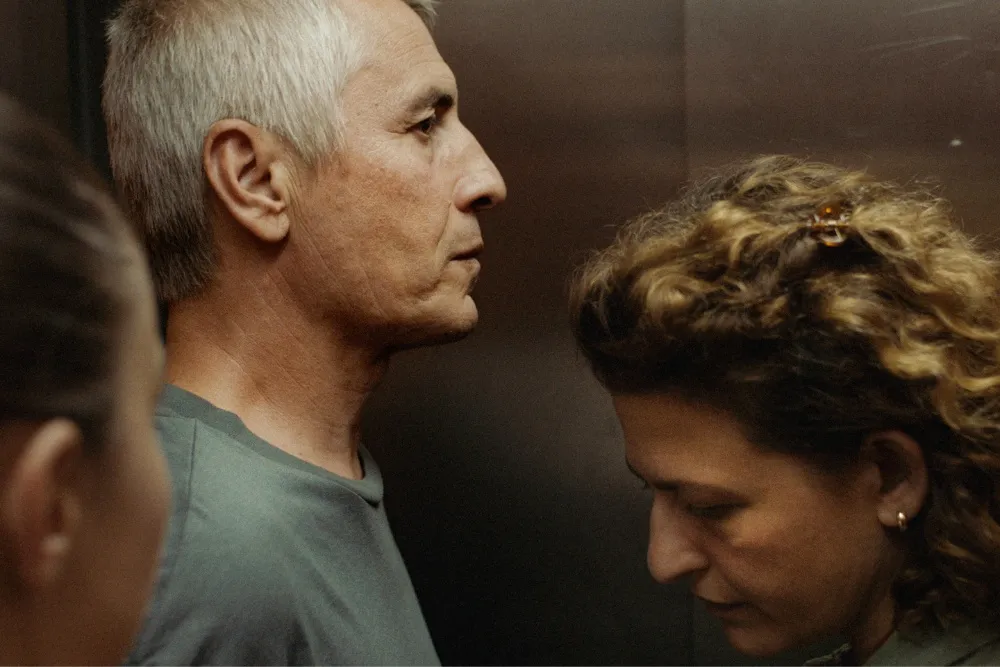
The Cost of Keeping Appearances: Visar Morina’s Anatomy of a Kosovar Family in Free Fall
There is a clinical, almost forensic precision to the way Visar Morina dissects the modern bourgeois psyche, and in his latest feature, Shame and Money, that dissection becomes a gripping, high-stakes excavation of human pride. Fresh from claiming the prestigious Grand Jury Prize at the Sundance Film Festival, the Kosovar-born auteur has returned to the Sarajevo Film Festival—the very soil of his early cinematic triumphs—to present a film that is as much an autopsy of class anxiety as it is a ticking-clock domestic thriller. Competing in Sarajevo’s main slate, Shame and Money chronicles the agonizing, self-inflicted descent of a Pristina family caught in the crosshairs of social mobility and economic precarity. Morina, whose previous works established him as a premier poet of displaced alienation, here turns his camera inward, capturing the suffocating weight of keeping up appearances in a society desperately sprinting toward a westernized capitalistic ideal.
The film’s brilliance lies in its refusal to offer easy sentimentality. Instead, Morina constructs a narrative crucible where reputational paranoia serves as the ultimate accelerant. We watch a family unravel not from a singular external catastrophe, but from the slow, corrosive leaks of pride, debt, and the toxic masculine imperative to preserve honor at any cost. With a chilly, meticulously framed visual palette that mirrors the architectural starkness of contemporary Kosovo, Shame and Money transforms the home from a sanctuary into a panopticon of mutual suspicion. Every unpaid bill, every whispered neighborhood rumor, and every desperate financial gambit becomes a symptom of a deeper, systemic rot. It is a biting social satire wrapped in the skin of a psychological thriller, proving that the fear of losing status can be far more lethal than the loss of capital itself.
> "It’s a look into the past and a warning to the future."
> — Visar Morina
At the heart of the film’s urgency is Morina’s own philosophical framing of his work as both a retrospective glance and a cautionary tale. Kosovo’s transition from post-war rebuilding to hyper-capitalist integration serves as the volatile backdrop for this domestic implosion. In Morina's hands, the family's free fall is not merely an isolated tragedy, but a diagnostic warning sign for a generation caught between the patriarchal ghosts of yesterday and the hollow promises of tomorrow’s consumerism. By examining the twin engines of societal control—the ancient currency of shame and the modern fuel of money—the film transcends its regional geography. It emerges as an urgent, universally resonant fable about the price of admission to the modern world, and the devastating cost of realizing that the ticket was counterfeit all along.