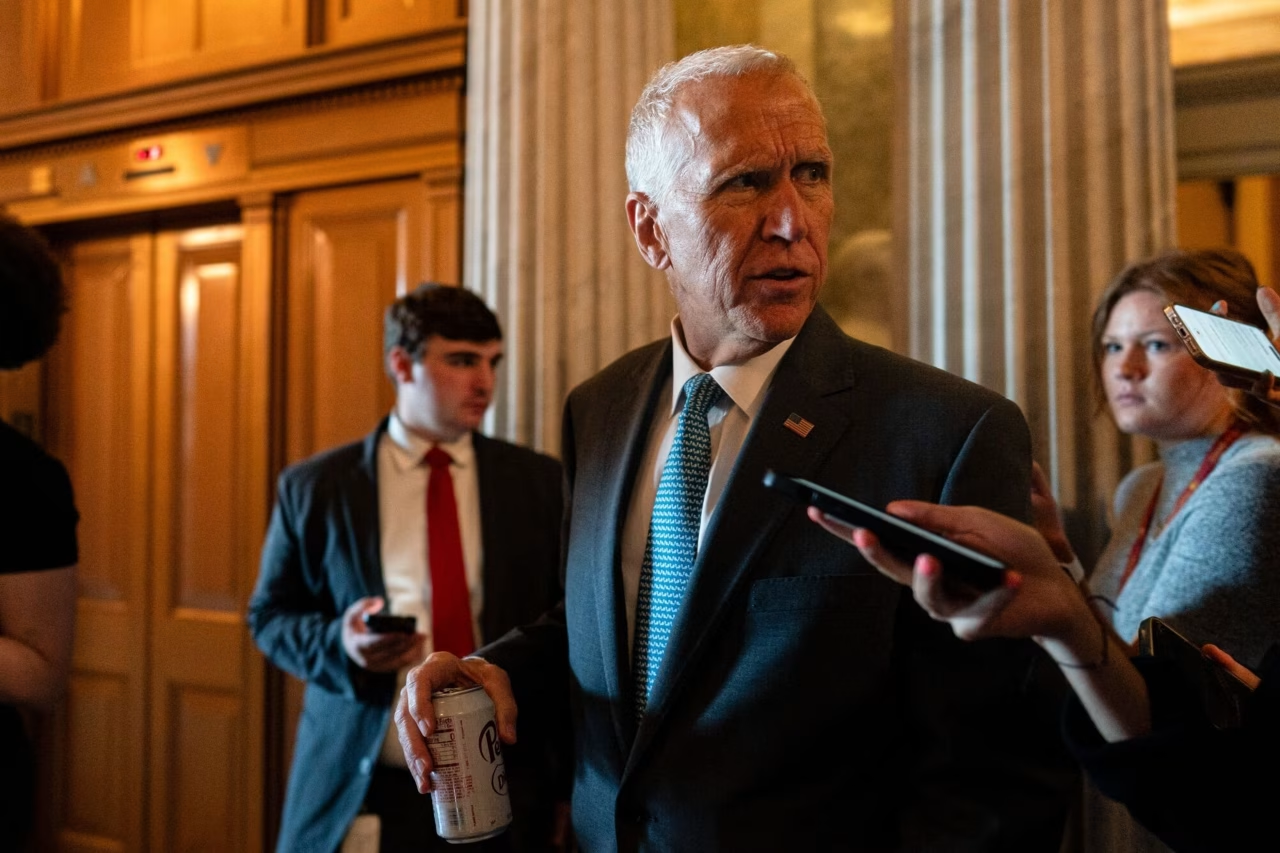
In the theater of political Washington, where the domestic arrangements of the ruling class are often as carefully curated as their legislative agendas, the red-brick townhouses of Capitol Hill serve as both sanctuaries and stages. For weeks, one such property—the historic residence of Senate Minority Leader Mitch McConnell—stood at the center of a silent, feverish vigil. Following a highly publicized fall and subsequent convalescence, the Kentuckian’s prolonged absence from the public eye transformed his D.C. home into a monument of speculation, monitored by prying eyes and telephoto lenses hunting for any sign of life. Yet, when the heavy front door finally swung open, the figure emerging into the crisp morning air was not the legendary, taciturn party patriarch, but rather Senator Thom Tillis of North Carolina, clutching a travel mug and harboring a delightfully mundane secret.
The revelation that Tillis has been subletting the property from McConnell adds a touch of light, theatrical irony to the otherwise somber atmosphere of a transitioning Senate leadership. It is a domestic twist that subverts the traditional Washington narrative of clinical detachment; here, the transactional nature of the Capitol is rendered literal. For months, onlookers had treated the townhouse as a barometer of McConnell’s physical vulnerability, a quiet fortress where the master strategist was presumed to be retreating from the twilight of his career. Instead, it was merely the temporary outpost of a junior colleague, navigating the pragmatic realities of the city’s notoriously cutthroat rental market under the roof of his own party leader.
```
"It is a relationship that elevates the standard landlord-tenant dynamic into a compelling metaphor for the modern Senate."
```
There is an irresistible, almost feudal charm to this arrangement. In a town where political capital is the ultimate currency, Tillis paying monthly rent to McConnell is a microcosm of the chamber’s internal hierarchy. McConnell, who has spent decades colonizing the machinery of the Republican party, has apparently extended his dominion to the physical real estate of his caucus. To rent from McConnell is to live not just within his party's grace, but literally within his walls—sleeping under his ceilings, perhaps drinking coffee in a kitchen once haunted by the quiet calculations of the Senate's most formidable whip. It suggests a clubby, archaic intimacy that persists behind the bitter, polarized theater of C-SPAN broadcasts.
Ultimately, the Tillis-McConnell tenancy reminds us that for all its grandiose marble and high-stakes brinkmanship, Washington remains a remarkably small town. The grand mysteries of statecraft often resolve themselves not in smoke-filled rooms, but in the mundane bureaucracy of security deposits and lease agreements. As McConnell prepares to eventually cede his historic leadership post, the image of his townhouse remains a potent symbol of his enduring legacy: even when he is not physically present in the capital, his colleagues are still living in the house that Mitch built.