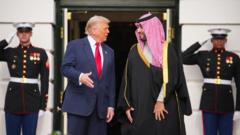
Saudis Must Recognize Israel to Secure Nuclear Cooperation Deal, Says Trump
U.S. President Donald Trump has conditioned a landmark civilian nuclear energy agreement with Saudi Arabia on the Kingdom formally recognizing the state of Israel and joining the Abraham Accords. The statement explicitly links Washington's highly sensitive nuclear non-proliferation negotiations directly to Middle Eastern geopolitical realignment. By tying the transfer of nuclear technology to diplomatic normalization, the administration is seeking to finalize a long-delayed security and economic framework that would reshape the balance of power in the region.
The Abraham Accords, originally brokered during Trump’s first term in office, successfully normalized relations between Israel and several Arab nations, including the United Arab Emirates, Bahrain, and Morocco. Riyadh, however, has remained the ultimate prize for U.S. diplomats. While Saudi Crown Prince Mohammed bin Salman has expressed open interest in civilian nuclear capabilities to diversify the Kingdom's oil-dependent economy, the Saudi leadership has historically conditioned normalization with Israel on progress toward a two-state solution with Palestine.
Under the proposed nuclear cooperation framework, Saudi Arabia would receive U.S. technical assistance to develop its domestic nuclear program, which the Kingdom insists is strictly for peaceful power generation. However, the deal has faced scrutiny from bipartisan lawmakers in Washington who fear it could spark a regional nuclear arms race, particularly with Iran. To mitigate these concerns, the U.S. is pushing for stringent oversight mechanisms. Trump's latest ultimatum places the onus on Riyadh to decide whether the strategic benefits of a U.S.-backed nuclear program outweigh the domestic and regional political risks of formalizing ties with Israel amid ongoing regional conflict.
Key Dimensions of the Proposed Agreement:
- The Abraham Accords Expansion: Integrating Saudi Arabia into the existing normalization framework to establish a broad anti-Iran security coalition.
- Nuclear Technology Transfer: Providing U.S. expertise to construct civilian nuclear reactors in Saudi Arabia, subject to strict non-proliferation safeguards.
- Strategic Defense Commitments: Potential bilateral security guarantees between Washington and Riyadh as part of the broader package.
While regional analysts suggest that a trilateral breakthrough remains highly complex, the administration's public positioning signals a determination to leverage American technological superiority to force a diplomatic shift. Whether Riyadh will accept these terms remains uncertain, as the Kingdom must balance its technological ambitions with its standing as a leader in the Arab and Islamic world.