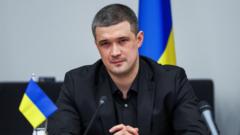
The Phantom Ballot: A Sacked Minister’s Provocation Tests Ukraine’s Wartime Consensus
In the darkened, sandbagged corridors of Kyiv, where the architecture of statehood has been retrofitted for sheer physical survival, a quiet political tremor has disrupted the wartime consensus. The nation has existed in a state of suspended animation since February 2022, bound by the iron-clad strictures of martial law, which deferred the messy, raucous liturgy of democracy in the name of existential preservation. Yet, that fragile domestic silence has now been shattered. The recently dismissed defense minister—a figure who once stood at the fulcrum of Western military procurement—has pierced the political quietude with a provocative, public demand: Ukraine must hold its presidential election, martial law notwithstanding.
This is no mere bureaucratic squabble; it is an elegant, calculated challenge to the narrative of unblinking unity cultivated by President Volodymyr Zelensky. Since the invasion began, the suspension of elections has been accepted by the populace as a grim necessity. After all, organizing a credible ballot when millions of citizens are displaced, trenches scar the eastern steppes, and Russian missiles routinely dissect the skies is a logistical absurdity. But by injecting this demand into the public square, the sacked minister has transformed his own political exile into a platform, daring the administration to defend its indefinite mandate and exposing the latent friction between wartime security and democratic legitimacy.
The debate touches a raw, philosophical nerve at the heart of Kyiv's struggle. Ukraine’s moral currency in the West relies heavily on its self-characterization as a vanguard of democratic freedom fighting an autocratic behemoth. Yet, the longer the electoral machinery remains mothballed, the more challenging that contrast becomes to sustain. Critics whisper of a creeping centralization of power under the guise of security, while pragmatists rightly warn that an election today would be a gift to Moscow—a catalyst for internal division and a logistical nightmare that would divert precious resources from the frontlines.
Ultimately, this sudden call for the ballot box is less about the immediate feasibility of voting and more about the anxiety of political obsolescence. It reveals that beneath the veneer of existential solidarity, the ancient, restless forces of political ambition and dissent endure. As the war grinds on, the ballot remains a phantom haunting the halls of Ukrainian power—a reminder that in the struggle to save a nation, the most difficult victory of all may be preserving the very democratic soul of what is being defended.