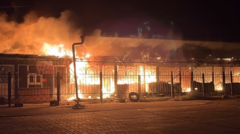
In the grim, ongoing ledger of the war in Eastern Europe, death is increasingly measured not in sweeping territorial advances, but in the relentless, daily arithmetic of retaliating strikes. The latest twenty-four-hour cycle offers a bleakly familiar vignette of this war of attrition: a volley of fire across contested borders that has left thirteen more souls claimed by the kinetic theater of the conflict. According to official dispatches, Moscow reported nine fatalities within its sphere of control, while Kyiv mourned four of its own. It is a terrible, rhythmic exchange—a back-and-forth of steel and fire that has ceased to shock a watching world, even as it continues to hollow out the lives of those caught in its trajectory.
For Russia, the reported loss of nine lives underscores a vulnerability that the Kremlin has long sought to minimize. Whether in the shell-pocked borderlands of Belgorod or the heavily militarized, occupied territories of Ukraine’s east, the war is no longer a distant television broadcast for ordinary citizens; it is an intrusive, lethal reality. Concrete dust and shattered glass now litter streets that were once deemed safely insulated from the front lines. In Moscow's official rhetoric, these casualties are quickly framed with a solemn, state-sanctioned martyrdom, weaponized to justify an ongoing campaign that has long since outgrown its original timeline and consumed its initial justifications.
Across the Dnipro, the Ukrainian state reported its own grim tally of four dead, a testament to the persistent, rain-like descent of Russian drones and missiles upon civilian infrastructure. In Kyiv and its surrounding regions, life has adapted to a surreal, fractured cadence where the wail of air-raid sirens is as commonplace as the morning commute. To walk through a Ukrainian town after such a strike is to witness a masterclass in stoicism and sorrow: rescue workers digging through the smoldering skeleton of an apartment block while neighbors stand quietly in the damp cold, their faces illuminated by the flashing amber of emergency lights. Here, the deaths are not mere numbers to be traded in diplomatic skirmishes, but tears in the very fabric of a society fighting for its existential survival.
This endless trade of lethality reveals the deep, exhausting paralysis of a conflict where neither side can currently deliver a decisive blow, yet neither can afford to pause. As the drone of sirens fades into the cultural background noise of Western geopolitics, these daily casualties risk becoming mere administrative details. Yet, behind the sterile announcements from both capitals lies the devastating reality of a borderland where the sky has been transformed into a permanent source of terror, and where the simple act of waking up has become a daily triumph of chance over tragedy.