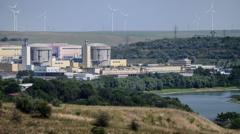
The Shrinking Danube: How a Warming Continent Silenced Romania’s Nuclear Heart
The Danube, that historic, winding artery of European commerce and romantic myth, has begun to whisper a quieter, more ominous tune. Scorched by an unrelenting summer heatwave, its waters have receded to expose parched banks and shallow, sluggish currents. Yet the most dramatic consequence of this hydrological retreat is not found in disrupted shipping lanes or withered riverbanks, but in the sudden, silent standstill of Romania’s only nuclear power plant. The Cernavodă facility, a brutalist monument to twentieth-century industrial ambition that quietly generates a crucial twenty percent of the nation’s electricity, has been forced into an abrupt shutdown. It is a stark, poetic irony of the Anthropocene: the very zero-emission infrastructure designed to shepherd humanity away from climate catastrophe has been rendered impotent by the warming atmosphere it was built to mitigate.
A Primordial Dependency
At the heart of Cernavodă's paralysis lies the fundamental, unyielding physics of thermodynamic survival. Nuclear energy, for all its futuristic promise and complex engineering, remains tethered to a primordial necessity: vast quantities of cool, moving water. The plant’s twin Canadian-designed CANDU reactors rely on a steady, robust draw from the Danube to absorb and dissipate their titanic thermal excess. As the river’s water level plummeted below critical operational thresholds, the margin of safety evaporated. With the cooling systems unable to guarantee safe operating temperatures, operators had no choice but to take the reactors offline. Authorities have signaled that the facility is unlikely to breathe back to life for at least the next ten days, leaving Romania’s national energy grid to navigate a sudden, gaping deficit at the very moment demand for air conditioning reaches its seasonal peak.
> "Nuclear energy remains tethered to a primordial necessity: vast quantities of cool, moving water."
The Vulnerability of a Fragile Transition
This forced hibernation is more than a localized crisis; it is an unsettling preview of a fragile continental future. As Europe strives to decouple its economy from both Russian gas and fossil fuels, the vulnerabilities of its green alternatives are being laid bare. When the continent's great rivers dry up, they do not merely disrupt scenic vistas; they choke the cooling systems of French nuclear fleets, stall the hydroelectric turbines of the Alpine valleys, and now, silence the eastern flank of European energy independence. The shutdown at Cernavodă serves as a trenchant reminder that in our haste to engineer a post-carbon future, we remain utterly subject to the mercurial temper of a changing climate.