EV Market Divergence: Rivian Lifts Delivery Outlook as Lucid Stumbles in Second Quarter
The electric vehicle (EV) sector showcased a stark divergence in performance this week as two of the most prominent American EV startups, Rivian Automotive and Lucid Group, reported contrasting trajectories. Rivian gave investors a substantial boost of confidence by raising its delivery outlook, signaling robust demand and improved production efficiencies. Conversely, Lucid Group struggled to match market enthusiasm, missing Wall Street's expectations for the second quarter as it grapples with sluggish demand and intense competition in the luxury sedan segment.
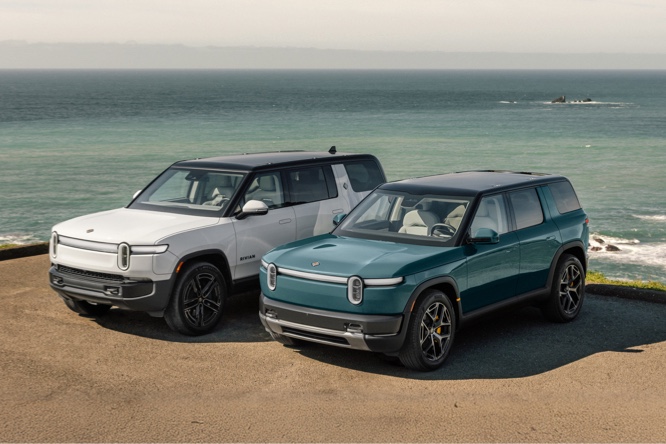
Rivian announced it has upwardly revised its delivery guidance, now aiming to hand over between 65,000 and 70,000 vehicles, up from its previous projection of 62,000 to 67,000 units. The upward revision highlights the company's stabilizing supply chain and the growing market footprint of its R1T pickup and R1S SUV models, alongside its commercial van operations. "We are seeing the fruits of our efforts to optimize our manufacturing processes and structurally reduce our costs," said Rivian CEO RJ Scaringe during a recent address to investors. This positive adjustment is seen by analysts as a crucial stepping stone as Rivian prepares its Illinois facility for the highly anticipated, high-volume R2 platform.
In contrast, Lucid Group's latest financial report painted a more challenging picture. The Newark, California-based luxury EV maker missed consensus estimates for the second quarter, facing persistent headwinds in scaling its production and attracting buyers for its premium Lucid Air sedan. Despite aggressive marketing campaigns and recent price cuts to stimulate demand, Lucid has struggled to capture the volume needed to offset its high capital expenditures. While the automaker continues to benefit from the substantial financial backing of Saudi Arabia’s Public Investment Fund (PIF), the Q2 miss underscores the difficulty of operating exclusively in the ultra-luxury niche amid a high interest-rate environment.
These mixed results highlight a broader maturation phase within the global EV industry. As early-adopter demand cools, automakers are increasingly forced to transition from proof-of-concept manufacturing to disciplined, cost-efficient mass production. Companies like Rivian that have successfully diversified their product lineups and optimized factory operations are beginning to establish a sustainable path forward, while those facing niche market constraints face a steeper climb to profitability.