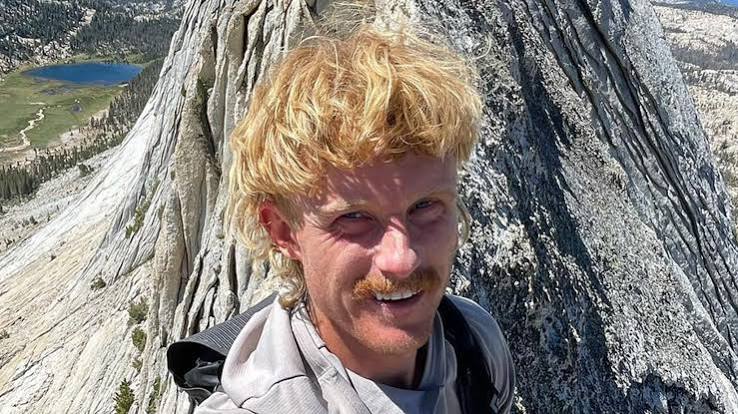
The Gravity of Grace: Remembering Jake Whisenant, Yosemite’s Fleet-Footed Icon
To look upon the sheer, monolithic face of Yosemite’s El Capitan is to confront a scale of time that renders human ambition fleeting, if not entirely absurd. Yet, for a rare breed of vertical ascetics, those three thousand feet of sheer granite are not a monument to permanence, but a racetrack. Among this daring cohort, Jake Whisenant moved with the urgent, gravity-defying grace of a person who had negotiated a private truce with the abyss. News of his death at the age of thirty—confirmed by official dispatches from the Tulare County Sheriff’s Office Coroner—has sent a profound shockwave through the global climbing community, abruptly halting a meteoric life that was defined by its refusal to slow down.
Whisenant’s legacy is carved indelibly into the stone of Yosemite, where he secured the coveted record for the fastest ascent up El Capitan—a feat that demands not merely physical virtuosity, but an almost pathological intimacy with risk. Speed climbing at this elite level is less an athletic pursuit than a high-stakes choreography, where the traditional safety margins of traditional mountaineering are systematically stripped away in service of pure velocity. To watch Whisenant climb was to witness a masterclass in kinetic economy; he treated the rock not as an adversary to be conquered, but as a partner in a frantic, vertical waltz.
The tragedy of his premature passing underscores the brutal paradox at the heart of extreme alpinism. The very attributes that elevate these athletes to mythical status—their singular focus, their willingness to dance on the razor’s edge of mortality—render them heartbreakingly fragile. While the coroner’s ledger will record the clinical realities of his departure, those who watched Whisenant run up the mountain understand that his life was lived in a different register altogether, one measured not in decades, but in the exquisite intensity of the vertical moment.
As the climbing world mourns, the great walls of the Sierra Nevada remain, indifferent to the records set upon them but permanently colored by the spirits who dared to scale them with such audacity. Whisenant leaves behind a fraternity of seekers who recognize that to live with such velocity is to accept the permanent proximity of the fall. In the quiet that now settles over the valley, his record stands as a monument to a brief, brilliant epoch when a young man climbed not just to conquer the stone, but to outrun the earth itself.