The Eternal Spectacle of ‘Reckless Ray’
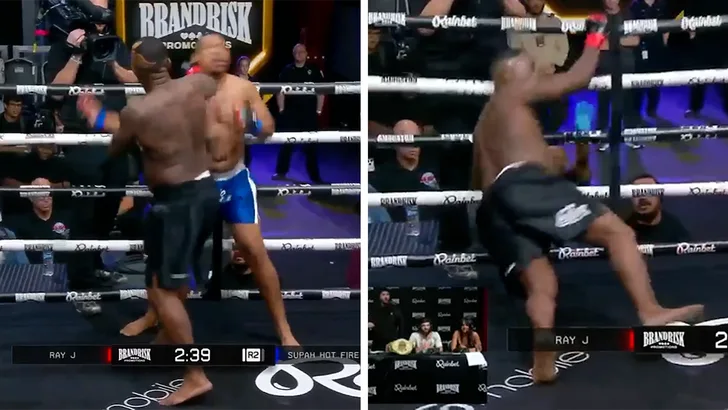
In the theater of contemporary celebrity, survival is often measured not by the heights of one’s artistry, but by the sheer elasticity of one’s dignity. Enter William Ray Norwood Jr.—better known to the cultural lexicon as Ray J—a man who has spent the better part of two decades navigating the shifting tides of American media as a self-styled maestro of the bizarre. His latest act, a bruising foray into the chaotic and highly commodified arena of celebrity boxing, ended in the stark ignominy of a knockout and a sobering four-night residency in a hospital ward. Yet, where a more conventional figure might find in physical trauma a quiet cue to exit stage left, Norwood has instead chosen to treat his hospitalization as merely another plot point in an ongoing, self-produced reality.
Speaking in a recent broadcast appearance, the 43-year-old entrepreneur and reality-television veteran dismissed any whispers of a permanent retirement from the ring. Operating under the self-anointed, split-personality moniker "Reckless Ray," Norwood framed his concussion-adjacent ordeal not as a cautionary tale of middle-aged hubris, but as a necessary, adrenaline-fueled prologue to further mischief. "I’ve got more crazy stuff to do before I finally grow up," he remarked, a sentiment that is both disarmingly candid and emblematic of a culture that refuses to let its icons age with anything resembling quiet grace. In Norwood's universe, the preservation of the physical self is secondary to the preservation of the brand; a hospital bed is not a place for sober reflection, but a temporary pit stop before the next stunt.
> "I’ve got more crazy stuff to do before I finally grow up."
This refusal to yield to the biological clock, or indeed to the laws of physics, speaks to a larger, more cynical truth about the modern attention economy. The phenomenon of influencer boxing has successfully transformed physical violence into a highly lucrative variety show, where blood is just another form of social engagement and defeat is easily rebranded as raw authenticity. For Ray J—a pioneer of the viral moment long before the term possessed its current corporate slickness—the ring is simply the logical extension of a career built on the precipice of catastrophe. He remains the eternal Peter Pan of the tabloid era, forever dodging maturity, trading his well-being for the fleeting, white-hot glow of the public gaze. Whether "Reckless Ray" can survive his own ambitions remains an open question, but the circus, it seems, has no intention of leaving town.