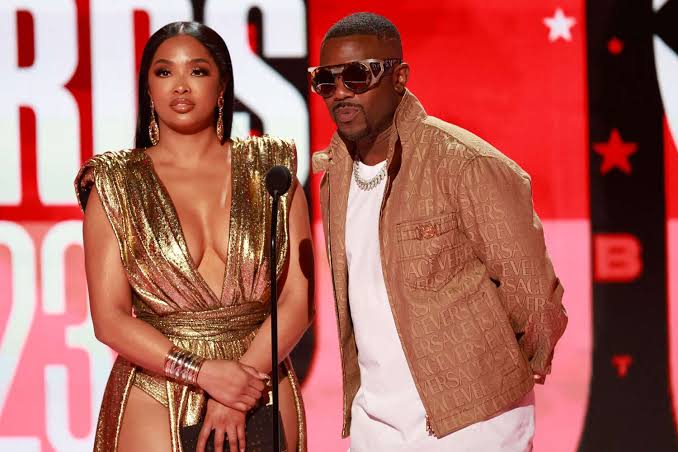
The Price of Reconciliation: Ray J, Princess Love, and the Transactional Art of Modern Romance
In the theater of twenty-first-century celebrity, love is rarely a private sanctuary; instead, it is a highly produced, multi-season narrative arc. Enter William Ray Norwood Jr.—known globally as Ray J—a man who has spent decades turning the chaotic tides of his personal life into viable cultural currency. His tumultuous, on-again, off-again marriage to Princess Love has long served as a centerpiece of this public spectacle. Recently, during an appearance on a prominent entertainment podcast, Norwood laid bare the blueprint for their potential reconciliation. It was a performance classic of his brand: part vulnerable confession, part hard-nosed business negotiation, suggesting that the path back to marital bliss is paved not merely with contrition, but with cold, hard capital.
The Terms of Endearment
Grilled about whether he could envision a future reunion with Love—who filed for divorce for the fourth time earlier this year—Norwood did not offer the standard, sanitized platitudes of Hollywood romance. Instead, he treated the prospect of rekindling their flame as a high-stakes corporate merger. He conceded that while the door remains open, the re-entry fee is exceptionally steep.
> "It's not going to be easy," Norwood remarked, adding with characteristic candor that the endeavor would certainly not be "cheap."
In Norwood’s lexicon, emotional labor is inextricably linked to financial investment. To win back Princess Love is to undertake a lavish campaign of restitution, a reality wherein the currency of apology must be backed by tangible assets and grand, costly gestures.
The Currency of Intimacy
This transactional framing of romance speaks volumes about the modern celebrity ecosystem, where intimacy is routinely quantified and broadcasted. For Ray J and Princess Love, whose domestic disputes have played out across reality television screens and social media feeds for a decade, the boundary between genuine affection and public relations has long since dissolved. Norwood’s insistence on "the right conditions" and financial gravity underscores a deeper truth about their dynamic: it is a relationship that thrives on the high drama of collapse and the lucrative promise of resurrection. In this world, a quiet reconciliation is a wasted media opportunity; a comeback must be an event, spectacular in both its emotional intensity and its price tag.
Ultimately, Norwood’s latest pronouncements ensure that the saga remains legacy-building and tantalizingly unresolved, keeping audiences hooked for the next installment. Whether this represents the cynical posturing of a seasoned entertainer or the genuine defense mechanisms of a man weary of the divorce court remains to be seen. What is certain, however, is that the ballad of Ray J and Princess Love will continue to play out on a stage of their own making—a glittering, expensive arena where love is never free, and the cost of admission is always rising.