Betting on the Behemoth: Inside the High-Stakes Skepticism of the Paramount-Warner Mega-Merger
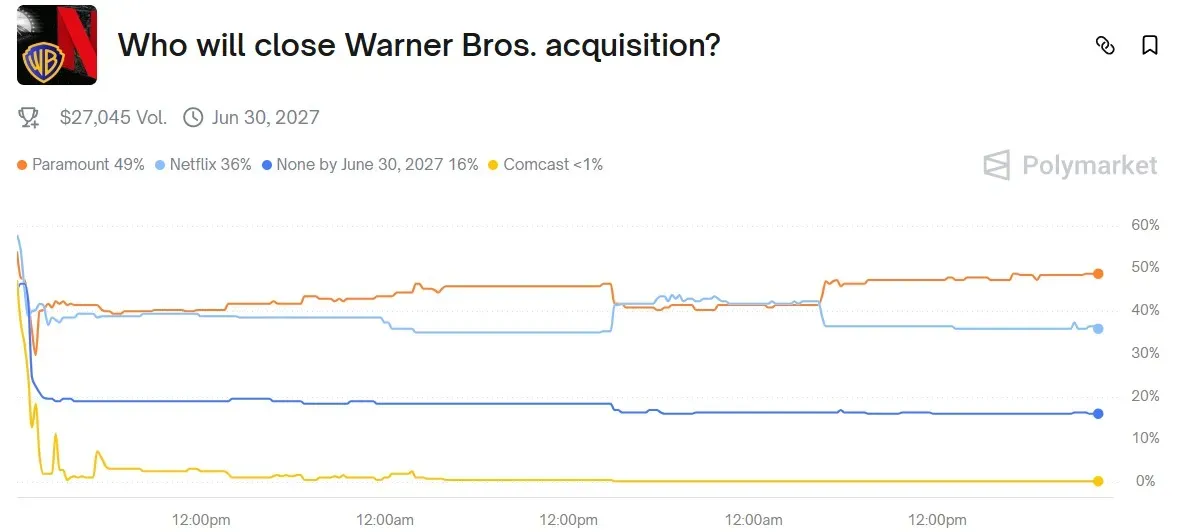
In the gilded theater of modern corporate consolidation, where legacy media empires attempt to outrun obsolescence through sheer gravitational mass, the proposed union of Paramount and Warner Bros. Discovery has devolved from a triumphant narrative of survival into a volatile spectator sport. The arbiters of this drama are no longer just suit-and-tie boardrooms or regulatory watchdogs, but a decentralized cadre of prediction market traders. These digital speculators, who trade on corporate fate with the cold detachment of croupiers, have recently priced the probability of the merger’s collapse at roughly one-in-four. It is a striking metric of skepticism—a collective calculation that, despite the immense gravity pulling these two cultural titans together, the corporate marriage may yet leave both standing jilted at the altar.
The fluctuating odds on these prediction platforms serve as a real-time fever chart of the deal's fraught journey through the regulatory gauntlet. Sentiment took a sharp, pessimistic turn following a coordinated offensive by twelve state attorneys general, who filed suit to block the transaction on antitrust grounds, arguing that such unprecedented consolidation would inevitably stifle creative competition and hike consumer prices. Yet, curiously, the current 25 percent failure probability represents a modest recovery in confidence compared to the dark days of late July. Back then, when Paramount unilaterally delayed the acquisition timeline to reassess its balance sheet, panic rippled through the speculative markets, sending the implied odds of a total deal collapse soaring.
What we are witnessing is the financialization of corporate suspense. For these traders, the merger is not a romantic rescue mission of the silver screen, but a complex equation of regulatory tolerance and debt-leverage endurance. The state-led lawsuit represents a formidable roadblock, yet the market’s refusal to price a failure higher than 25 percent suggests a cynical belief in the inevitability of consolidation. In an era where streaming economics have turned brutal and traditional cable assets are evaporating, many observers suspect that regulators may ultimately lack the stomach—or the legal leverage—to force these diminished giants to stand alone. For now, the one-in-four odds of failure remain a poignant testament to the fragile state of modern entertainment: a industry so desperate to survive that even a deeply troubled, legally contested mega-merger is still favored to cross the finish line.