The Carbon Cost of Our Digital Utopia: Big Tech’s AI Dream Meets the Hard Physics of the Grid
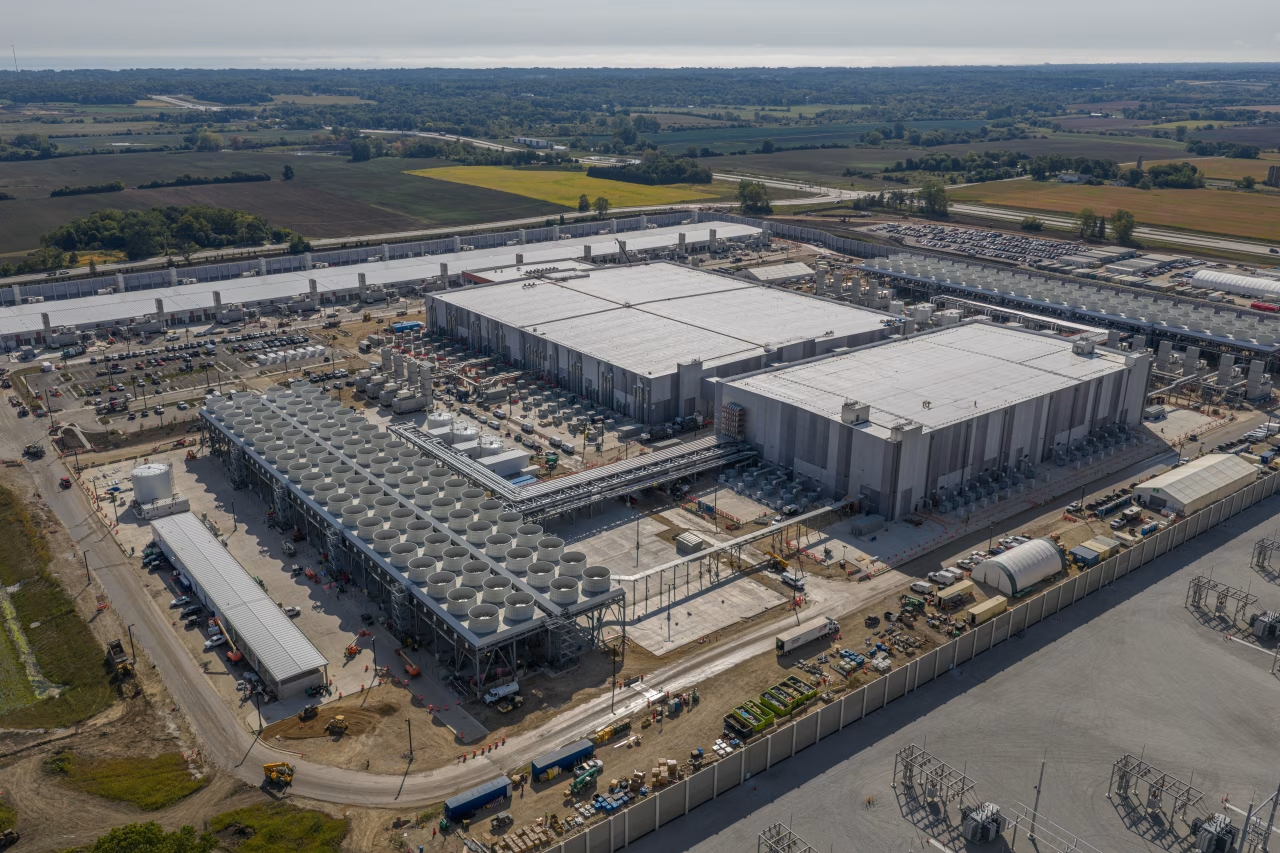
For over a decade, Silicon Valley successfully sold the public on the myth of the "Cloud"—a weightless, celestial archive where our collective memories, queries, and algorithms floated, pristine and decoupled from earthly consequence. Yet, the cloud has finally made landfall, revealing itself to be made of poured concrete, humming copper, and an insatiable hunger for raw electricity. A sobering new analysis reveals that the current wave of planned U.S. data centers is projected to produce carbon dioxide emissions equivalent to putting an additional 24 million gas-burning cars on the road. The pristine, automated future we were promised, it turns out, is quietly being fueled by the dirtiest relics of the industrial age.
The Ravenous Architecture of Intellect
This ecological reckoning is driven by the computational brute force required to sustain the artificial intelligence gold rush. Unlike the passive storage of the early digital era, generative AI models do not merely sit on servers; they live, breathe, and sweat, requiring continuous, staggering inputs of power to train neural networks and process millions of daily prompts. To keep these monolithic server farms from melting under the strain of their own cognitive load, massive cooling systems run around the clock. In tech corridors from the suburban plains of Northern Virginia to the high deserts of Oregon, local utilities are being forced to defer the retirement of coal plants and greenlight new natural gas infrastructure just to keep the lights on in Silicon Valley’s remote outposts.
> "We are witnessing a profound collision between corporate public relations and the unyielding laws of thermodynamics."
The bitter irony is that this surge comes precisely as the tech industry’s vanguard attempts to market itself as the vanguard of global sustainability. For years, the sector’s elite have burnished their brands with elegant pledges of "net-zero" emissions and 100% renewable energy portfolios by the decade’s end. But the sheer scale of the AI deployment has outpaced the growth of wind and solar grids, forcing a quiet, desperate retreat to fossil fuels. The very algorithms designed to optimize global supply chains and predict climate volatility are, in a perverse twist of fate, accelerating the very crisis they are ostensibly programmed to solve.
The Mirage of Frictionless Living
Ultimately, this energy crisis exposes the central delusion of modern consumer lifestyle: the belief that digital convenience is free of physical consequence. Every instantaneously generated image, every synthetically drafted email, and every seamless cloud backup carries a physical tax, paid in megawatt-hours and atmospheric carbon. As these sprawling data cathedrals continue to colonize the American landscape, they stand as monuments to a culture that demands the infinite expansion of the virtual world, even if it comes at the direct expense of the fragile, breathing one we actually inhabit.