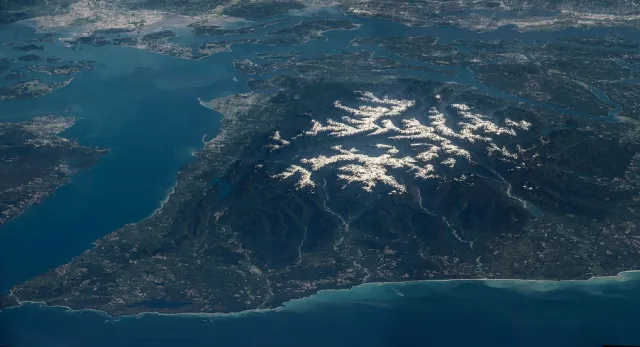
NASA Captures Majestic Views of Washington’s Olympic Mountains from Space
NASA has released breathtaking new imagery and video footage highlighting the rugged grandeur of the Olympic Mountains in northwestern Washington state. Captured by Earth-observing satellite instruments, the visual data showcases the dramatic topography of the Olympic Peninsula, where snow-capped peaks tower over deep, glacier-carved river valleys. The release offers both scientists and the public a striking, orbit-level perspective of one of the most ecologically diverse and topographically complex regions in North America.
The Olympic range, protected largely within the boundaries of Olympic National Park, is renowned for its rapid elevation gain, rising from sea level to nearly 8,000 feet at the summit of Mount Olympus. This unique geography traps moisture-laden winds coming off the Pacific Ocean, resulting in extraordinary annual precipitation. This moisture feeds legendary temperate rainforests on the western slopes and deposits heavy snowpacks on the high peaks. Over millennia, massive glaciers and powerful river systems—such as the Hoh, Elwha, and Quinault rivers—have carved the deep valleys prominently visible in the NASA imagery.
Beyond their aesthetic appeal, these high-resolution observations provide critical data for ongoing environmental research. NASA’s Earth-observing fleet monitors seasonal snowpack levels and the health of the peninsula's remaining glaciers, which have been retreating due to shifting global temperatures.
"Satellite observations give us an invaluable macro-perspective to track how these sensitive alpine ecosystems are responding to a warming climate," said Dr. Aris Stylianopoulos, an Earth observation specialist collaborating with regional climate initiatives. "Monitoring the density of the winter snowpack and the rate of spring runoff is crucial for predicting summer water availability in the river basins below, which local communities and salmon populations rely upon."
Established as a national park in 1938 and later designated a UNESCO International Biosphere Reserve, the Olympic wilderness remains a vital living laboratory. NASA’s latest release serves as a powerful reminder of the dynamic geological forces still actively shaping the Pacific Northwest. By pairing space-based technology with conservation science, researchers hope to better understand and preserve the delicate hydrological systems that flow from these majestic, snow-capped summits.