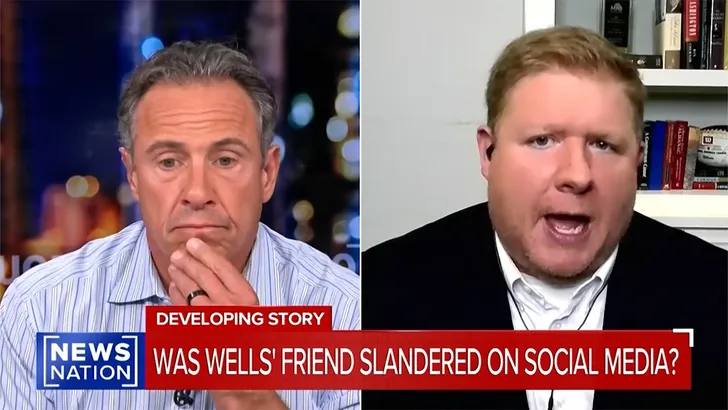
The modern tragedy no longer ends at the shoreline; it merely migrates to the digital colosseum, where private grief is dissected in high definition. In the agonizing aftermath of the maritime incident involving Nolan Wells, the public search for answers has curdled into a feverish, crowdsourced hunt for culpability. At the center of this contemporary maelstrom is a disputed Sea Tow distress call—a crackling, desperate transmission from the dark water that has been subjected to the relentless alchemy of internet sleuths and amateur audio engineers. What was once a muffled cry for help in a vast, indifferent soundscape has been "enhanced" by third parties to point a spectral finger at Wells’ companion, Bart Edmiston Jr. Yet, as the court of public opinion prepares its swift verdict, the defense has launched a fierce counter-offensive, transforming a prime-time cable television slot into a trial on the integrity of digital evidence itself.
Appearing under the sterile, high-contrast studio lights of NewsNation with host Chris Cuomo, Russell Latino—the formidable attorney representing Edmiston—did not merely defend his client; he dismantled the very medium of the accusation. Latino flatly asserted that the widely circulated, seemingly damning "enhanced" audio was not a revelation of hidden truth, but a fabricated artifact. "Doctored," he declared, a word that carries a chilling resonance in an era already paralyzed by deepfakes and algorithmic deceit. To Latino, the audio represents a dangerous synthesis of technological overreach and narrative desperation—an attempt to conjure a villain out of static and oceanic white noise to satisfy a public that demands a tangible culprit in the wake of Wells’ heartbreaking disappearance.
The Auditory Mirage
```
"To mistake the artifacts of digital amplification for the voice of truth is the great folly of our technological age."
— Russell Latino, Counsel for Bart Edmiston Jr.
```
This high-stakes clash highlights a distressing new frontier where tragedy, technology, and the law collide. In a traditional courtroom, evidence is subjected to rigorous chains of custody and expert forensic cross-examination; in the lawless arena of social media, a filtered soundbite can destroy a reputation before a single subpoena is drafted. Latino’s public stand is a defense of his client, certainly, but it also serves as a sharp cultural critique of our collective vulnerability to audio-visual confirmation bias. When the wind, the waves, and the desperate static of a VHF radio can be digitized, isolated, and reassembled to fit a pre-existing theory of guilt, the line between investigative breakthrough and high-tech witch hunt dissolves entirely. For those caught in the devastating wake of the Wells tragedy, the struggle is no longer just against the elements, but against the ghosts engineered in the digital machine.