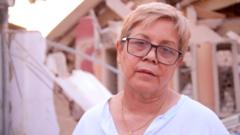
'No one move!': The Agonising Silence as Venezuela Rescuers Listen for Survivors
In the wake of a devastating natural disaster in Venezuela—where torrential rains have triggered massive landslides and structural collapses across vulnerable hillside communities—emergency response teams are racing against the clock. With tens of thousands of people still officially unaccounted for, the search and rescue operations have entered a critical, agonizing phase. In the hardest-hit sectors, specialized acoustic search teams and canine units are demanding absolute quiet, desperately listening for any faint scratching, tapping, or muffled cries emanating from beneath tons of concrete, mud, and twisted metal.
"No one move! Quiet!" yells a rescue coordinator, his voice cutting through the heavy, humid air. Instantly, hundreds of volunteers, soldiers, and grief-stricken relatives freeze in place. For several minutes, the only sounds are the dripping of water and the distant hum of emergency generators. These moments of tense silence have become a recurring, agonizing ritual across the disaster zones.
> "We are looking for miracles now," said Carlos Mendoza, a veteran search-and-rescue technician operating in the affected region. "Every second counts, and even the slightest vibration or background noise can drown out a survivor's call for help. We do not stop until we are absolutely certain there is no one left viable beneath the wreckage."
The scale of the crisis has overwhelmed local municipal services, drawing grim comparisons to some of Venezuela's worst historical mudslides, such as the catastrophic Vargas tragedy of 1999. Infrastructure vulnerabilities, compounded by years of economic strain, have left many informal settlements on steep terrains highly susceptible to rapid-onset geological disasters. While international aid agencies and local non-governmental organizations are scrambling to provide logistical support, the mountainous geography and severely blocked access roads have hindered the deployment of heavy excavation machinery. Consequently, much of the delicate initial recovery work is being conducted by hand, using shovels, buckets, and specialized listening devices.
As night falls, search operations continue under the harsh glare of portable floodlights. Local communities have rallied to support the first responders, organizing makeshift kitchens and supply lines, even as they mourn their own losses. Families remain huddled near the perimeter of the debris fields, holding vigils and waiting for any news of their missing relatives. Although the window of survivability narrows with each passing hour, rescue coordinators emphasize that search efforts will persist around the clock, driven by the lingering hope that more survivors will be pulled from the silence of the rubble.