The Cruel Equilibrium: Kyiv Mourns Under Ballistic Fire as Ukraine Strikes Back at Sea
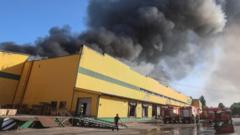
Kyiv’s skyline, a fragile tapestry of historic golden domes and scarred Soviet-era concrete, has once again been bruised by the screech of incoming ballistic metal. The latest barrage from Moscow claimed nine lives in the Ukrainian capital, a grim reminder of the terror that routinely rains from the stratosphere. These were not casualties of some distant, muddy trench line, but citizens caught in the sudden, violent reorganization of a Tuesday morning. This escalation in ballistic strikes represents a deliberate, psychological grinding down of civilian resolve—a choreography of fire designed by the Kremlin to prove that no sanctuary is absolute. To walk the shattered streets of Kyiv in the aftermath is to witness a society that has, out of sheer necessity, metabolized tragedy into a grueling civic routine, where the smell of cordite and pulverized plaster hangs in the air alongside the steam of morning espresso.
Yet, even as the smoke hung heavy over the Dnipro River, a very different kind of reckoning was unfolding hundreds of miles to the south. In the grey, restless waters of the Black Sea, Ukraine delivered another masterclass in asymmetrical warfare, sinking a Russian container ship suspected of ferrying vital military logistics. The strike was a clinical, high-stakes demonstration of tactical ingenuity: a nation effectively operating without a traditional navy continuing to systematically dismantle the maritime hegemony of a nuclear superpower. The sunken vessel, now resting on the seabed, served as a crucial artery for Russia’s southern front. Its destruction underscores Kyiv's refusal to play the passive victim, proving that while its cities remain vulnerable to terror from above, its forces retain the capacity to sever the Kremlin’s logistical lifelines below.
This dual reality—the tragedy of the capital’s high-rises and the triumph in the shipping lanes—epitomizes the current, agonizing phase of the war. We are witnessing a conflict defined by a brutal, asymmetric equilibrium. For Vladimir Putin, the terrorization of Kyiv remains a blunt-force instrument of geopolitical leverage, an attempt to exhaust both Ukrainian endurance and the patience of Western air-defense patrons. For Ukraine, the maritime campaign is an elegant, technologically sophisticated counter-punch that exposes the limits of Russian naval defense. As winter approaches, the chess board remains bloodied and unresolved: a nation mourning its dead under the shadow of sirens, even as its engineers rewrite the rules of modern naval engagement in the cold, dark waters of the south.