The Alchemy of Pressure: Translating the Deep Secrets of Planets into Human Narrative
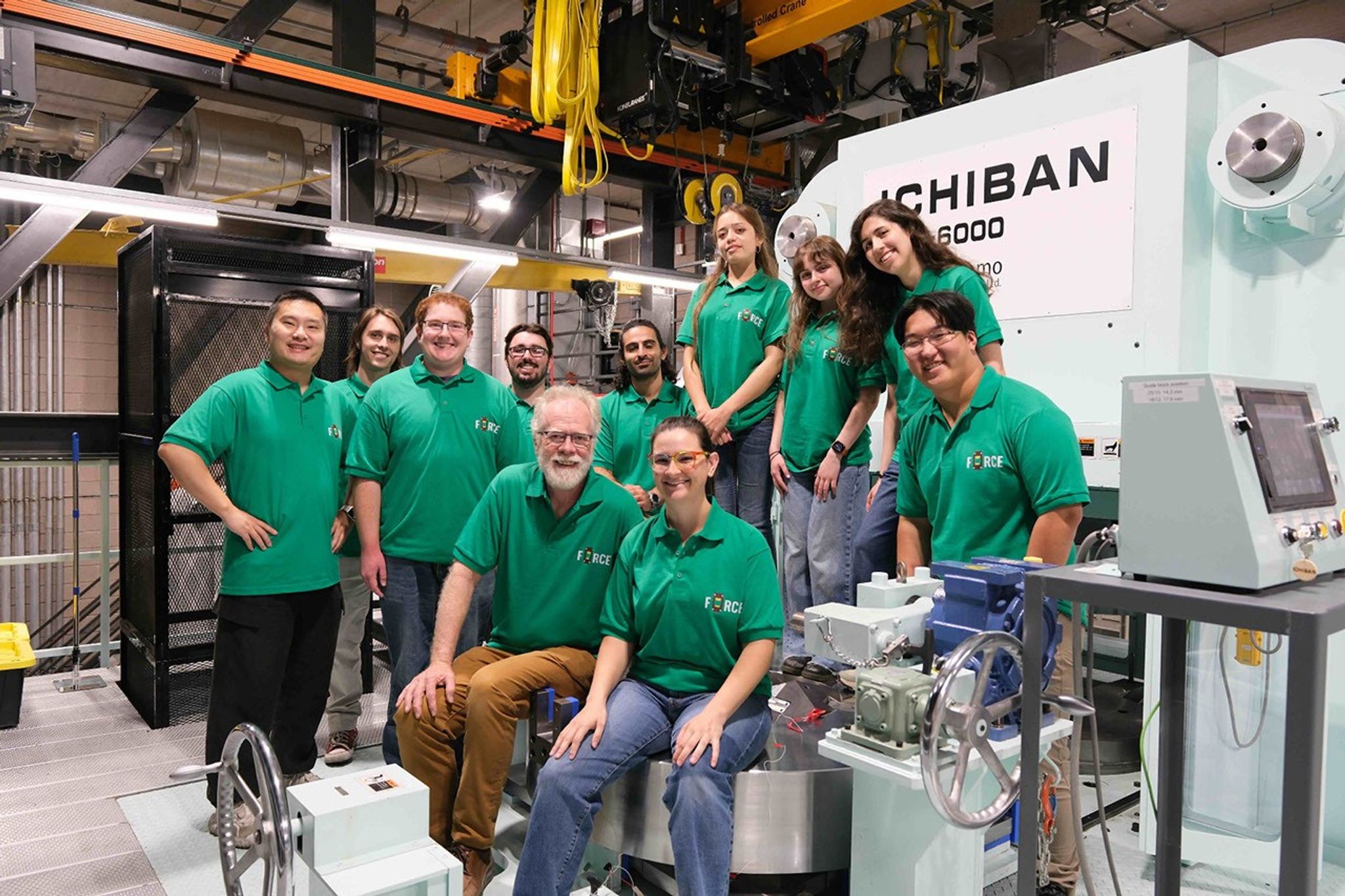
In the windowless, hyper-calibrated sanctuaries of the FORCE laboratory, scientists routinely perform a kind of secular alchemy. Here, researchers deploy monstrously powerful high-pressure apparatuses to recreate the crushing, incandescent realities of planetary interiors—environments where atoms are squeezed into exotic lattices and the deep, silent histories of alien worlds are forged. Yet, as these modern-day Hephaestians peer into the molten hearts of simulated super-Earths, they face a terrestrial challenge of an entirely different magnitude: translating the quiet, violent majesty of their data into a language that can penetrate the ambient noise of a highly distracted public.
This existential gap between the sublime complexities of planetary geology and the demands of public comprehension is the frontier of a new pedagogical initiative. Recognizing that a breakthrough uncommunicated is, culturally speaking, a breakthrough that does not exist, a cohort of next-generation planetary scientists at FORCE are being schooled in the delicate, urgent art of public engagement. It is no longer enough to master the physics of gigapascals and iron-nickel cores; these young researchers must now learn to navigate the slippery topography of contemporary media landscapes, transforming dense mathematical proofs into narratives that spark the collective imagination.
> "In an era fractured by skepticism and saturated with misinformation, the survival of scientific progress depends entirely on the eloquence of its practitioners."
The endeavor represents a vital shift in the scientific ethos, one that treats communication not as an afterthought or a superficial public relations exercise, but as a core methodology. In workshops designed to dismantle the esoteric jargon of the academy, researchers practice translating the extreme physics of planetary creation into evocative human terms. The challenge is formidable: how does one convey the unimaginable pressure of a gas giant's mantle without losing the rigorous precision that defines scientific inquiry? The answer lies in finding the human resonance within the cold physics—shaping a story of discovery that positions the laboratory not as an isolated ivory tower, but as a window through which we might understand our own fragile place in the cosmos.
Ultimately, this training acknowledges a profound truth of our current cultural moment: the true measure of scientific success will not merely be recorded in peer-reviewed journals, but in the rekindled sense of wonder inspired in a public hungry for truth. By arming these young minds with the rhetorical tools to match their analytical prowess, the program at FORCE ensures that when we finally unlock the deepest secrets of the cosmos, we will possess the vocabulary to share them.