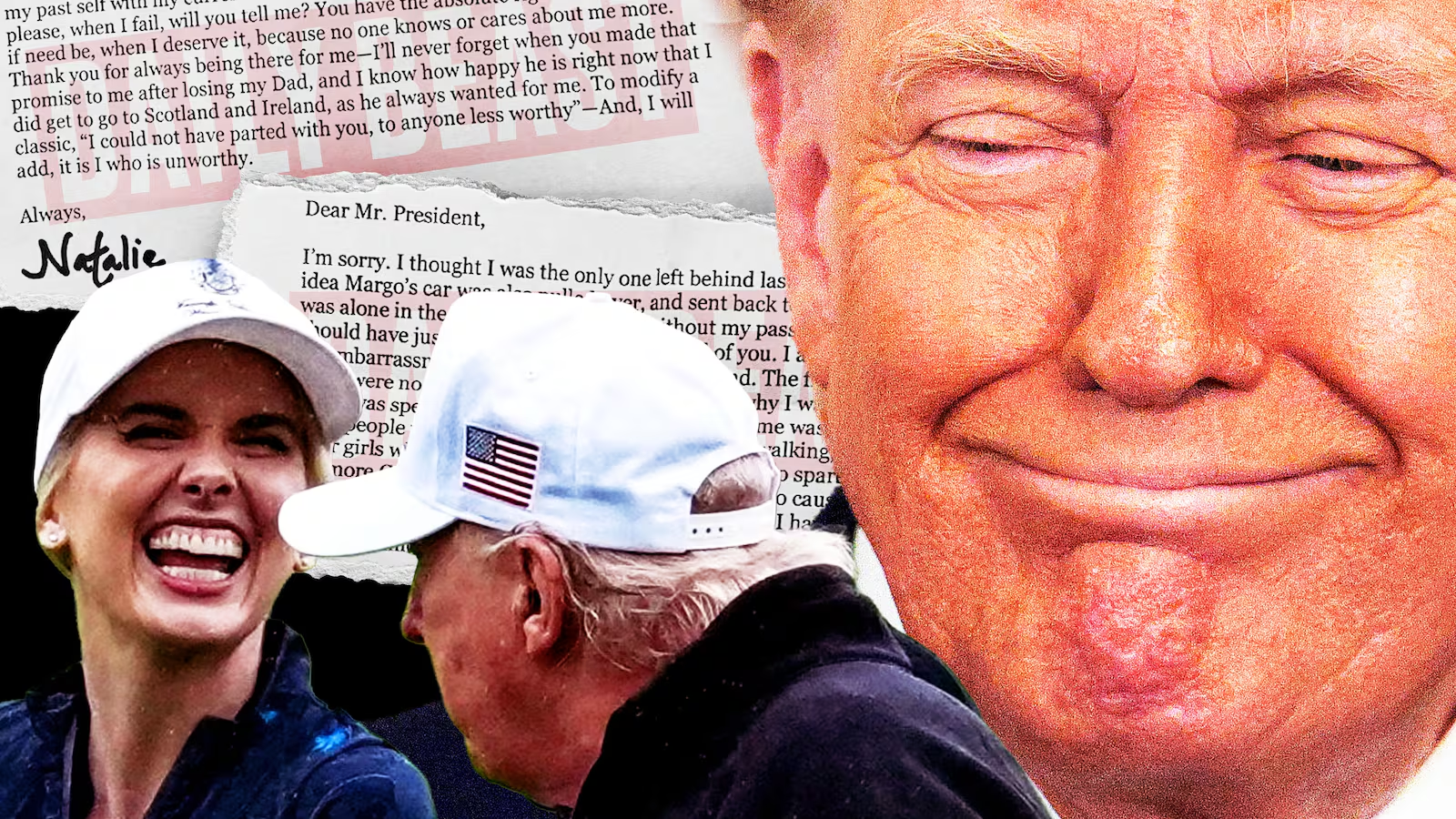
The Architecture of Devotion: Inside Natalie Harp’s Letters to Donald Trump
A cache of private correspondence reveals the intense, almost theological loyalty of the former president’s closest gatekeeper.
In the gilded, air-conditioned corridors of Mar-a-Lago, power is measured not in policy papers or legislative victories, but in the absolute proximity of one’s devotion. Among the constellation of loyalists who have orbited Donald Trump, few have occupied a space quite as intimate, or as singularly modern, as Natalie Harp. Known colloquially as his "human teleprompter"—the ubiquitous aide tasked with accompanying the former president on golf courses and campaign trails, armed with a portable wireless printer to feed his insatiable appetite for positive reinforcement—Harp has long been a quiet fixture of the MAGA vanguard. But newly revealed letters penned by Harp to Trump elevate her role from mere staffer to something resembling a high priestess of personal loyalty. The correspondence, laid bare for the first time, offers a rare, unfiltered glimpse into the psychological architecture of Trump’s inner sanctum, where professional duty is utterly subsumed by a profound, almost theological fidelity.
The prose of the letters is striking in its vulnerability and its stark, unadorned subservience. In these private missives, Harp lays bare a worldview where Trump is not merely a boss or a political leader, but the sun around which her entire reality coalesces. She writes with an agonizing sincerity of her terror of ever letting him down, declaring that he is quite literally all that matters to her. It is the language of the classic courtier, updated for the populist age—a testament to a devotion so absolute that it transcends the traditional boundaries of political loyalty. In her eyes, Trump is a salvific figure, a sentiment rooted in her own history as a bone cancer survivor who publicly credited his "Right to Try" legislation with saving her life. For Harp, her labor is not a career; it is an ongoing act of existential gratitude. This is not the transactional networking of standard Washington; it is a total surrender of self, where the emotional weather of the leader dictates the climate of the follower's world.
> "He is quite literally all that matters to her..."
This revelation does more than satisfy a curiosity about the internal dynamics of Trump's circle; it serves as an elegant, if unsettling, metaphor for the broader political landscape. Harp represents the ultimate evolution of the political aide in an era dominated by personality cults and algorithmic feedback loops. In her total dedication to curation—ensuring that Trump’s worldview is never pierced by the harsh light of unfavorable coverage—she has become both his shield and his mirror. To read her letters is to understand how modern power maintains its grip: through the creation of an ecosystem so fortified by devotion that dissent becomes not just a political disagreement, but an act of personal betrayal. Harp’s letters are a poignant reminder that in the theater of contemporary populism, the most valuable currency is not policy, but the quiet, desperate promise to never let the illusion shatter.