NASA’s Webb Telescope Offers Rare Glimpse Into the Far-Future Survival of Dying Solar Systems
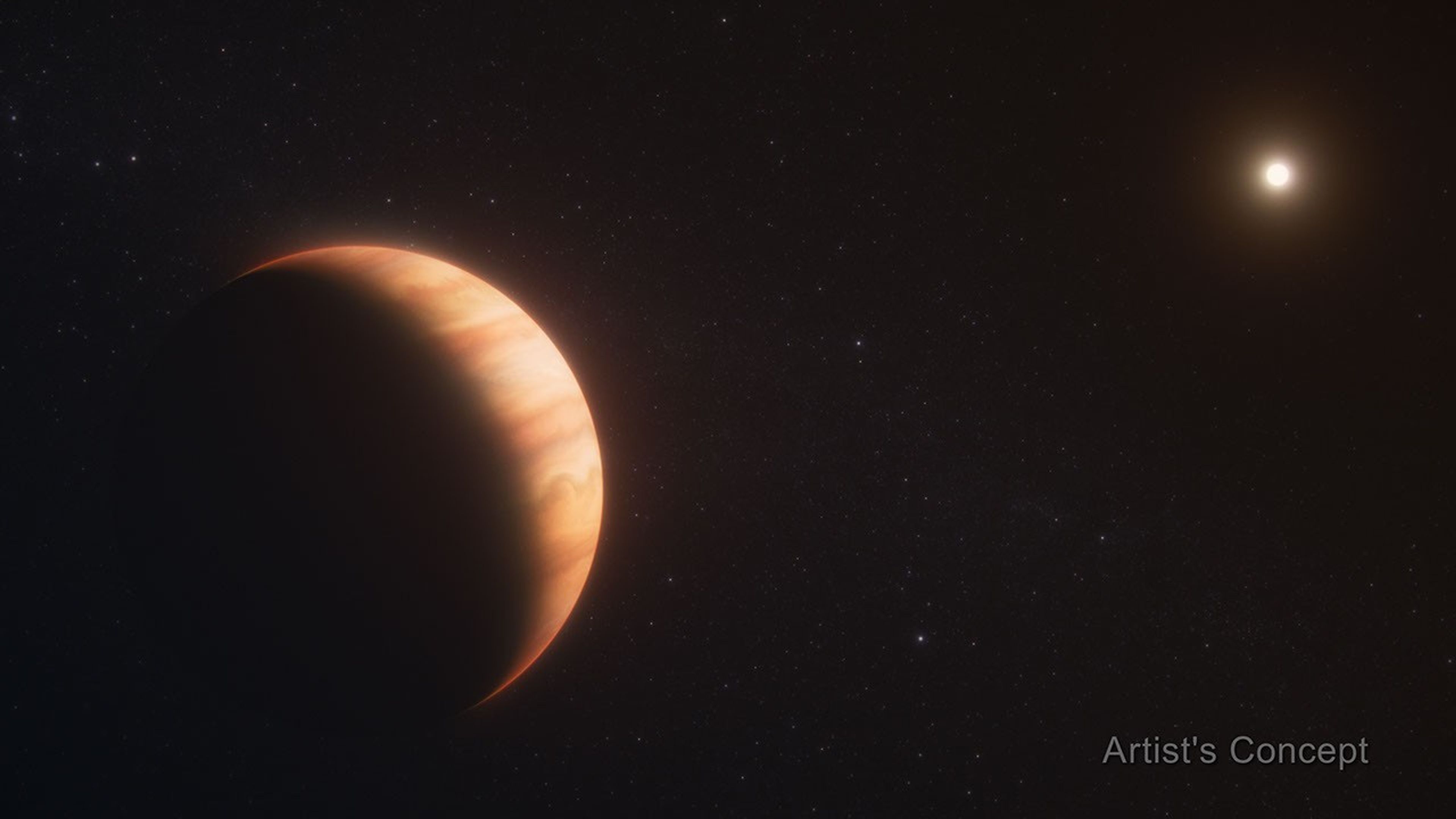
NASA’s James Webb Space Telescope (JWST) has captured groundbreaking new data on how giant planets can survive the violent death of their host stars, offering a profound preview of the far-future of our own solar system. Billions of years ago, a distant Sun-like star nearing the end of its life swelled tremendously in size to become a red giant, engulfing inner worlds before collapsing into a dense white dwarf. Scientists studying this stellar remnant with JWST have identified candidate giant planets that managed to endure this cataclysmic transition, providing crucial direct evidence of planetary survival.
Leveraging the unparalleled sensitivity of Webb’s Mid-Infrared Instrument (MIRI), astronomers were able to isolate the faint heat signatures of these surviving gas giants. Observing planets around white dwarfs has historically been an immense challenge due to the vast distances and the extreme faintness of the cooling worlds. However, Webb’s advanced infrared capabilities allow researchers to detect the lingering thermal glow of these exoplanets, which remain warm millions of years after their host star's demise.
This discovery holds profound implications for the ultimate fate of our own planetary neighborhood. In approximately five billion years, our Sun will deplete its hydrogen fuel and expand into a red giant, a phase that will likely vaporize Mercury, Venus, and potentially Earth. However, the survival of these distant exoplanets suggests that our outer solar system may not share the same doom.
The Future of Our Solar System
Based on the JWST observations, scientists can map out a likely timeline for our outer planets:
- The Red Giant Phase: As the dying Sun expands, its outer layers will push outward, swallowing the inner rocky planets.
- Mass Loss and Orbital Drift: The Sun will shed its outer envelope, losing a significant portion of its mass. This reduction in gravity will allow outer planets like Jupiter and Saturn to migrate outward into wider, safer orbits.
- The White Dwarf Era: The Sun will shrink into a cool, dense white dwarf, orbited by the surviving, drifted outer gas giants.
"With Webb, we are beginning to see the actual physical templates for what will eventually happen to planets like Jupiter and Saturn when our own Sun dies," said a lead NASA astrophysicist associated with the study. "We no longer have to rely solely on theoretical models to predict the survival of these outer worlds. We now have the direct observational evidence showing that these planets can, and do, survive the death of their stars."
These findings mark a major milestone in exoplanetary science. By continuing to study these resilient worlds, NASA researchers hope to unlock deeper secrets about the atmospheric composition of post-stellar planets and further refine our understanding of planetary evolution across the cosmos.