The Architecture of the Wind: Inside NASA’s New Era of Flight Dynamics
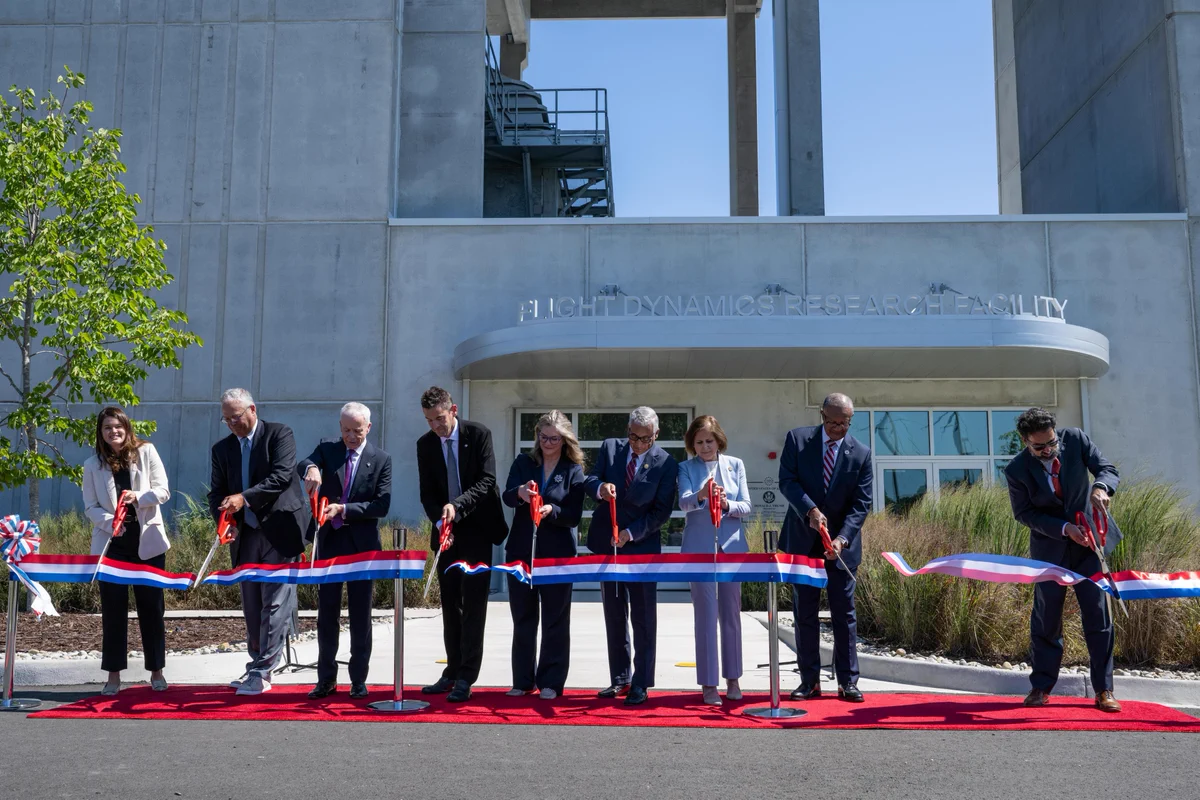
On a sweltering midsummer Friday in the Tidewater region of Virginia, where the ghosts of early aviation history quietly coexist with the digital vanguard, NASA opened a portal to the future of flight. On July 31, 2026, agency administrators and Virginia dignitaries gathered at the Langley Research Center in Hampton to cut the ribbon on the Flight Dynamics Research Facility (FDRF)—NASA’s first major new wind tunnel in over forty years. In an era dominated by silicon-based simulations and virtual design, this monolith of concrete, steel, and sophisticated turbofan technology serves as a striking, physical declaration: when it comes to the chaotic, unforgiving physics of the atmosphere and deep space, there is still no substitute for the absolute truth of rushing air.
For nearly a century, Langley has been the crucible of American aerospace, a place where the foundational math of spaceflight was calculated by hand and tested in cathedral-like wooden tunnels. The FDRF represents a radical evolution of this legacy. Designed as a highly vertical, state-of-the-art wind tunnel, the facility is engineered to simulate the erratic, highly dynamic environments that vehicles encounter during the most perilous phases of flight—specifically, entry, descent, and landing. By generating precise, vertical airflows, researchers can study the free-flight behavior of scale models, observing how future spacecraft will tumble through the thin carbon-dioxide skies of Mars, or how next-generation autonomous drones will navigate the turbulent microclimates of modern, dense urban canyons.
```
"The Flight Dynamics Research Facility is not merely a testament to where we have been, but a manifestation of where we are going—from the quiet supersonic corridors of our own skies to the uncharted atmospheres of distant worlds."
```
The realization of the FDRF highlights an intriguing philosophical inflection point in modern engineering. For years, the prevailing narrative suggested that computational fluid dynamics (CFD) and supercomputing would render physical wind tunnels obsolete, reducing the study of aerodynamics to sterile pixels on a screen. Yet, as aerospace designs grow more radical—ranging from inflatable planetary heat shields to sweeping, blended-wing-body commercial transports—the limits of digital prediction have become apparent. Nature, in its infinite fluid complexity, routinely humbles the algorithm. By marrying advanced laser-diagnostic imaging and high-speed telemetry with a physical slipstream, the FDRF bridges the digital-physical divide, offering scientists a high-fidelity laboratory where hypothesis meets immediate, empirical reality.
As the agency marches forward with its ambitious Artemis lunar missions and eyes the horizon of crewed Martian exploration, the FDRF arrives not as a relic of a bygone industrial age, but as an essential instrument of the future. It is a monument to the enduring necessity of physical experimentation. In the quiet, pressurized chamber of Langley’s newest marvel, the wind is once again being harnessed—not just to test the limits of our ingenuity, but to safely guide us toward the stars.