The Architecture of Subtraction: Curiosity’s Lonely Vigil at Miraflores
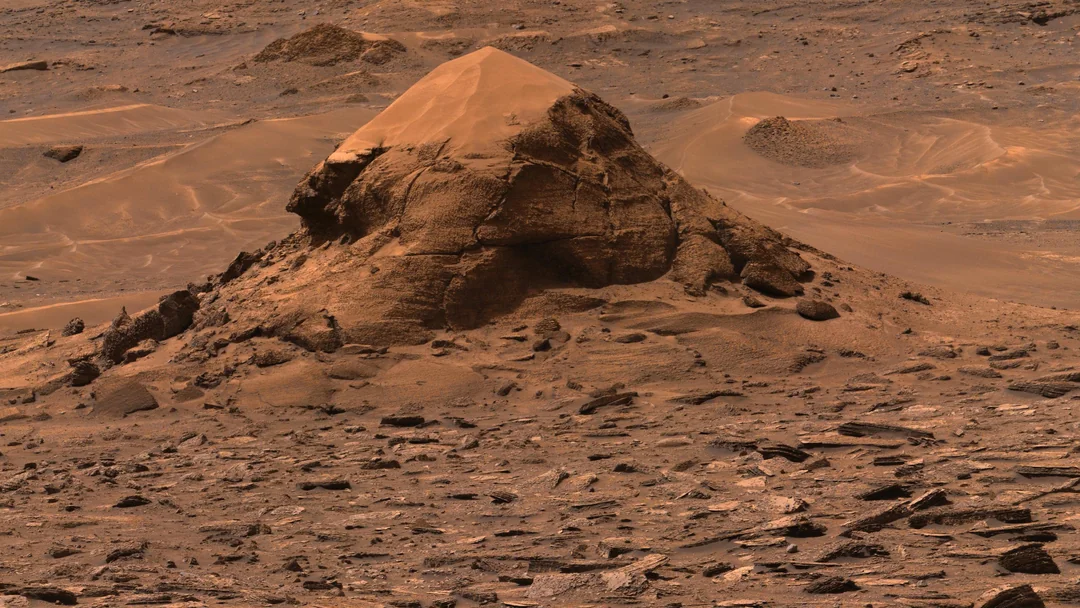
On June 11, 2026—Sol 4,923 of an extraterrestrial residency that has long since transcended its original scope—NASA’s Curiosity rover paused in the Martian dust to capture an image of exquisite, desolate beauty. Using its high-resolution Mast Camera (Mastcam), the robotic sentinel framed a twenty-foot-tall, sand-capped butte nicknamed "Miraflores." Standing like a ruined watchtower against the undulating expanse of the red planet, the structure is a striking monument to deep time. It is a geological feature defined not by what was built, but by what was taken away—a stubborn remnant of ancient history that refused to vanish when the surrounding plateau surrendered to the elements.
There is a bittersweet irony in its moniker. Miraflores—Spanish for "look at the flowers"—conjures images of lush, coastal terraces blooming under a terrestrial sun. Here, in the hyper-arid quiet of Mars, the only bloom is the pervasive, oxidized rust of the soil. Yet, geologically, the butte tells a story of profound dynamic history. Eons ago, this valley was a contiguous floor of sedimentary rock. Over incomprehensible stretches of time, relentless Martian winds flayed the landscape, carving away the softer stone and deepening the broad valley. Miraflores survived this atmospheric assault thanks to its protective crown of dark, dense sand, which acted as an armor, shielding the more fragile sediments beneath it from the wind's abrasive chisel.
To gaze upon Miraflores through Curiosity’s lens is to experience a profound double-exposure of temporal scales. On one hand, we are presented with the immediate, razor-sharp precision of 21st-century human engineering, transmitting data across millions of miles of void. On the other, we are staring into the slow, silent engine of cosmic erosion, where change is measured in millions of years. As Curiosity continues its lumbering journey across the crater floor, leaving its own temporary tread marks in the dust, the sand-capped butte of Miraflores remains behind—a solitary, wind-sculpted monolith guarding a valley of whispers, waiting for the atmosphere to eventually finish what it started.