The Alchemy of Flight: NASA’s Newest 737 Sheds Its Military Skin for the Heavens
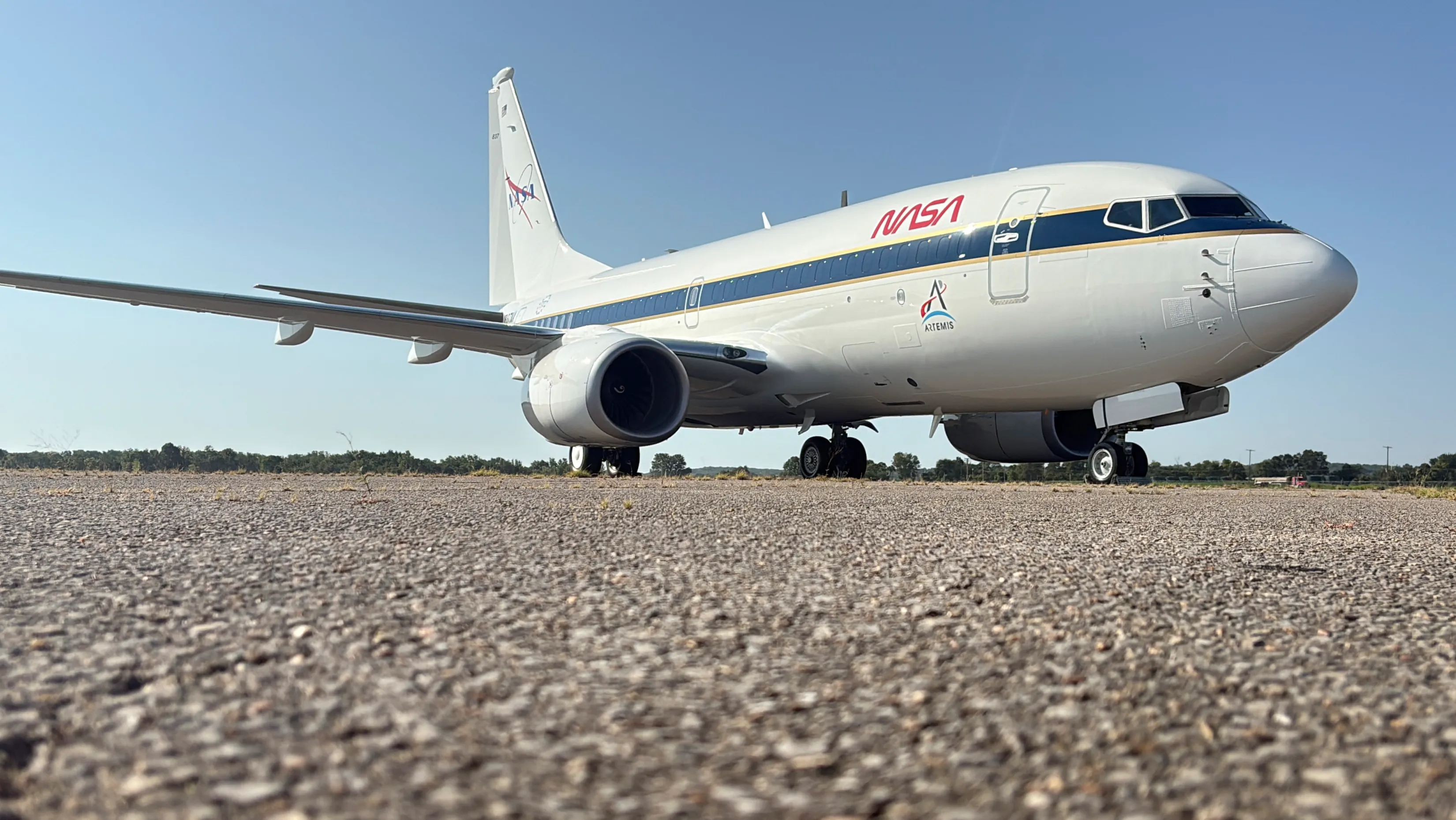
In the cavernous, climate-controlled hangars of Oklahoma, a profound transformation of federal machinery took place this week—one that speaks quietly but eloquently to the shifting priorities of American aerospace. A Boeing 737, recently retired from the austere, utilitarian grey of the United States Air Force, emerged beneath a fresh coat of high-gloss white, bisected by the iconic, retro-futuristic sweep of NASA’s blue and red livery. This cosmetic rebirth marks the latest chapter for an airframe transferred in June to NASA’s Armstrong Flight Research Center in Edwards, California. In the world of aviation, a new paint job is rarely mere aesthetics; it is a public shedding of martial secrecy, an initiation ritual transitioning a weapon of logistics into an instrument of pure scientific inquiry.
The destiny awaiting this reconstituted airliner is one of deliberate, elegant instability. Undergoing extensive modifications to serve as the agency’s premier reduced-gravity testbed, the 737 will soon spend its operational life carving massive, parabolic arcs through the upper atmosphere. By climbing steeply and then entering a controlled, nose-down dive, the aircraft will plunge its occupants and cargo into brief, twenty-second windows of weightlessness. Specifically, the aircraft is being calibrated to simulate the alien environment of lunar gravity—that strange, one-sixth fraction of Earth's pull that astronauts will encounter on the Moon. As NASA marches toward its ambitious Artemis missions, this sky-bound laboratory will serve as a vital terrestrial crucible, testing the rovers, spacesuits, and life-support systems destined for the lunar south pole.
There is a rich, almost romantic lineage to this endeavor. For decades, the agency’s parabolic workhorses—colloquially and affectionately dubbed "Vomit Comets"—were converted military tankers that subjected generations of astronauts to the grueling, stomach-churning physics of microgravity. This new 737, a modern icon of civilian commercial travel, represents a sleeker, more precise era of airborne testing. Stationed at Edwards Air Force Base, amidst the historic, heat-shimmered salt flats of the Mojave Desert where the sound barrier was first broken, the aircraft stands as a monument to institutional evolution. It is a reminder that the path to the stars is paved not just with rocket fire, but with the patient, gravity-defying rehearsals of converted machines.