The Architecture of Vertigo: Inside NASA’s Newly Reimagined Theater of Flight
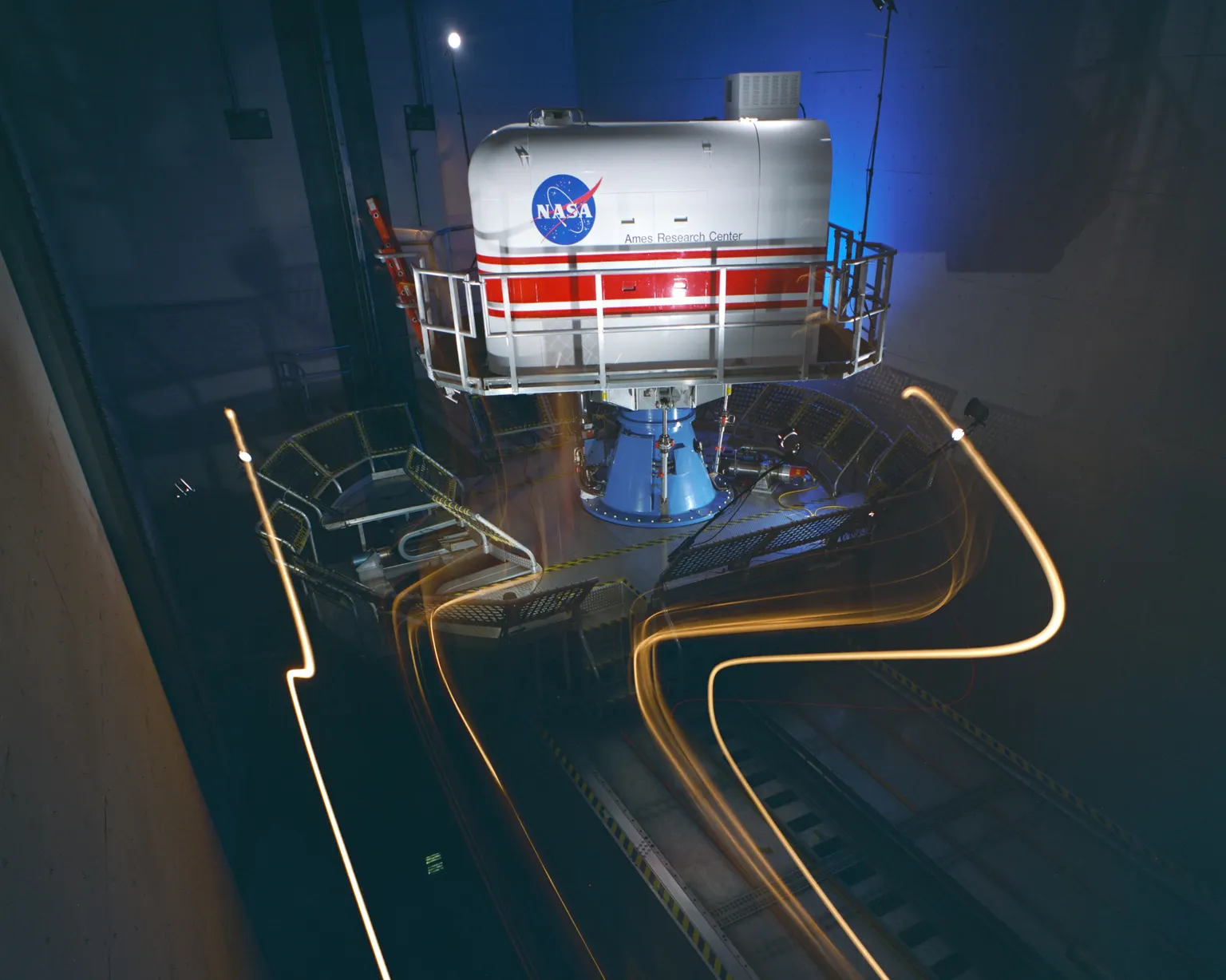
In an era dominated by the ethereal weightlessness of the digital cloud, NASA’s Vertical Motion Simulator (VMS) remains a colossal, unapologetically physical monument to the visceral realities of gravity. Nestled within the historic, wind-swept confines of the Ames Research Center in Silicon Valley, this ten-story behemoth is the world's largest flight simulator—a mechanical titan designed not merely to display flight, but to force the human body to believe it. To enter its interchangeable cab is to step into a sensory crucible. Whether replicating the violent, shuddering descent of a lunar lander onto the jagged dust of the Moon’s south pole or the delicate, twitchy aerodynamics of a futuristic electric air taxi navigating a crowded urban canyon, the VMS translates sterile mathematical equations into a bone-rattling, stomach-churning reality.
Recalibrating the Crucible
Recently, this legendary apparatus underwent a profound technological renaissance. Recognizing that the next generation of aerospace endeavors demands an unprecedented level of physical fidelity, NASA engineers have systematically overhauled the simulator's core architecture. The upgrade infuses the massive mechanical system with state-of-the-art computing power, ultra-low-latency fiber optics, and advanced motion-cueing algorithms that virtually erase the microscopic lag between visual stimulus and physical motion. This is not merely an incremental hardware refresh; it is an existential recalibration. As aerospace design pivots away from traditional fixed-wing aircraft toward highly autonomous, multi-rotor electric vertical takeoff and landing (eVTOL) vehicles and complex thrust-vectoring spacecraft, the simulator’s ability to faithfully replicate transient, non-linear physical forces has become the ultimate arbiter of pilot safety and vehicle viability.
> "Code can calculate a trajectory, but it cannot feel the sudden, terrifying pocket of dead air or the subtle, inertial drift of a failing thruster."
There is a profound, almost poetic irony in the fact that as artificial intelligence and pure virtual reality grow increasingly sophisticated, the premier laboratory for pioneering the future of flight remains a massive, hydraulic-powered kinetic theater. It underscores an immutable truth of exploration: while software can model the universe, the human nervous system requires a physical interlocutor to truly learn. By bridging the chasm between the cold abstraction of digital design and the raw, unpredictable theater of physical reality, the upgraded VMS ensures that when astronauts and pilots finally confront the perilous unknowns of the lunar surface or the crowded skies of tomorrow's metropolises, their muscles and minds will have already conquered the terrain. In this grand simulated space, NASA has not just built a better machine; they have perfected the art of rehearsal before the curtain rises on the next century of flight.