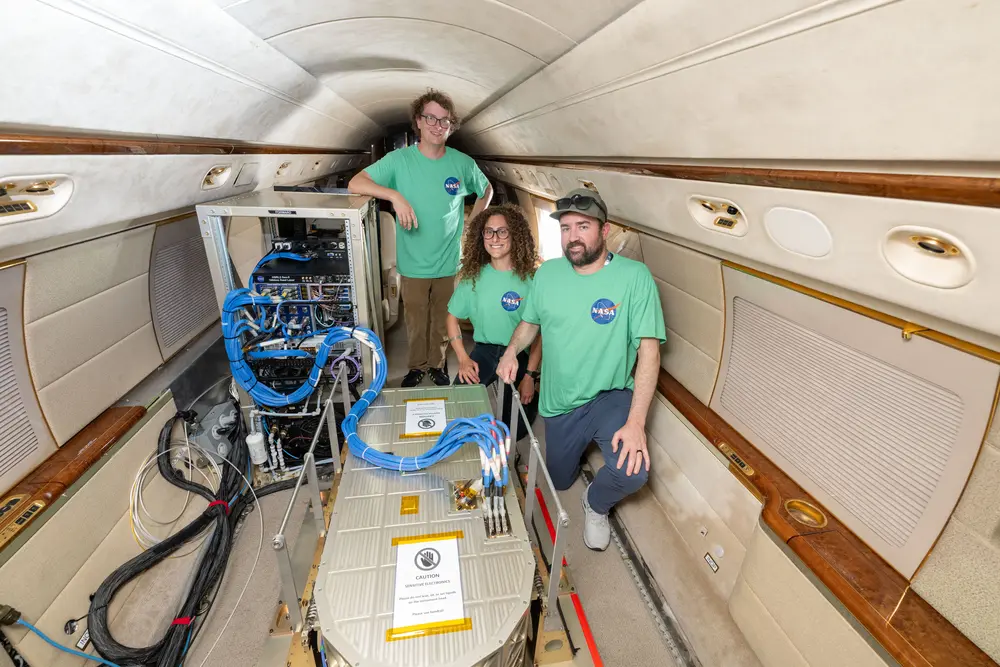
Future Scientists Take Flight: NASA’s SARP Program Bridges Classroom and Cockpit
From June 3 to 13, the skies above Ellington Field in Houston, Texas, became a living laboratory as the next generation of atmospheric scientists took to the air. As part of NASA’s long-standing Student Airborne Research Program (SARP), a select cohort of undergraduate students moved beyond traditional textbook learning to engage in the rigorous, high-stakes environment of airborne data collection. The program, which utilizes NASA’s specialized fleet of research aircraft, provides participants with a rare opportunity to observe how sophisticated remote sensing instruments monitor the Earth’s complex systems from altitudes that offer a unique perspective on global climate dynamics.
The 2024 iteration of SARP focused on the intersection of atmospheric chemistry, terrestrial ecology, and air quality modeling. By embedding students directly into the operations of field campaigns, the program aims to demystify the pipeline of climate science—from the initial calibration of onboard sensors to the complex task of atmospheric data synthesis. Throughout the ten-day stint at Ellington Field, students worked alongside seasoned NASA researchers, gaining technical proficiency in analyzing carbon dioxide levels, particulate matter distribution, and vegetation health. This hands-on immersion is designed to cultivate the analytical skills necessary for the modern scientific workforce, preparing students to tackle pressing environmental questions regarding the planet's changing climate.
Historically, SARP has served as a vital pipeline for NASA’s Earth Science Division, successfully transitioning students from academic research to professional roles within the agency and broader scientific community. By providing access to high-altitude flight missions, NASA underscores the importance of empirical data collection in the age of climate uncertainty. The program’s curriculum is structured to emphasize the interdisciplinary nature of modern science, ensuring that students understand how air quality metrics directly correlate with broader climate modeling efforts.
Key objectives of this year’s mission included:
- Instrument Operation: Training students in the management of complex remote sensing equipment during active flight operations.
- Data Integration: Developing skills to translate raw flight data into actionable research models for environmental policy.
- Collaborative Research: Fostering partnerships between university cohorts and professional NASA scientists to address real-world air quality challenges in the Houston metropolitan area.
As these students return to their respective universities, they carry with them more than just technical knowledge; they possess a renewed understanding of the scale and precision required to safeguard the Earth’s atmosphere. Through programs like SARP, NASA continues to invest in the critical infrastructure of human talent, ensuring that the mission of Earth observation remains robust, innovative, and deeply integrated into the academic landscape.