The Sublime Choreography of the Void: Inside NASA’s Upcoming Orbital Balancings
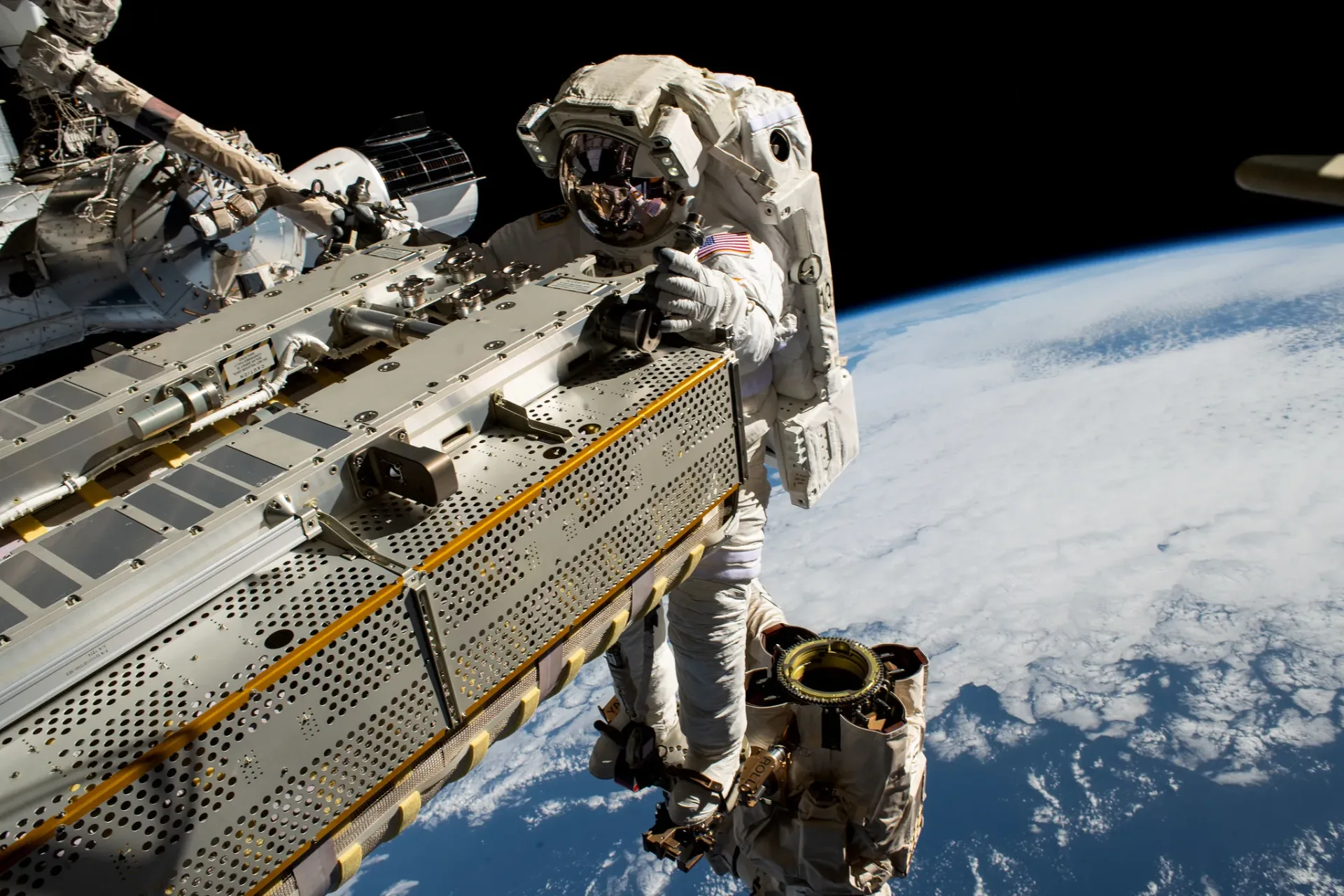
In the clinical lexicon of modern spaceflight, the phrase "station maintenance" is often deployed with a deliberate, reassuring banality, evoking the terrestrial routine of fixing leaky plumbing or swapping out aging fuses. Yet, on Tuesday, September 1, when two astronauts cross the threshold of the Quest airlock into the unforgiving vacuum of low-Earth orbit, this domestic metaphor will dissolve into a high-wire act of human survival played out against the indifferent velvet of the cosmic abyss. Beginning with live coverage at 7:00 a.m. EDT, the public will be invited to watch as these orbital mechanics embark on a grueling, six-half-hour ballet of precision and endurance. Their principal task, scheduled to begin in earnest around 8:30 a.m., is the delicate extraction and replacement of a degraded spacecraft navigational aid—a critical compass in an environment where "up" and "down" are mere illusions.
```
"To step outside the station is to enter a theater of pure vulnerability, where the line between routine work and existential hazard is as thin as a visor plate."
```
The work awaiting the crew is a masterclass in high-tech husbandry, a series of meticulous adjustments and system overhauls required to sustain the International Space Station, a sprawling, fragile cathedral of aluminum and solar arrays that has served as humanity’s outpost in the dark for over two decades. To perform these deeds while encased in the stiff, pressurized armor of an Extravehicular Mobility Unit—where every bend of a finger requires fighting the suit’s internal pressure and a single microscopic tear means instant mortality—is to redefine the concept of manual labor. The replacement of the navigational aid is particularly symbolic. It is a stark reminder that even as our collective imagination drifts toward the colonizing of Mars and the exploitation of the deep cosmos, our foothold in the present relies on the unglamorous, sweaty upkeep of the instruments that tell us exactly where we stand.
For the audience tethered to the comfortable pull of Earth's gravity, the livestreamed event offers a peculiar, hypnotic beauty. Through NASA's high-definition cameras, the frantic noise of terrestrial life is temporarily silenced, replaced by the slow, majestic rhythm of floating tether lines, the metallic clink of specialized tools, and the breathtaking backdrop of the blue planet spinning silently beneath the astronauts' boots. It is a spectacle that transcends mere technical reportage; it is an aesthetic and philosophical intermission. When the airlock finally seals and the cabin repressurizes, the station will slide back into the shadows of the thermosphere—mended, calibrated, and quietly hurtling forward into the dark.