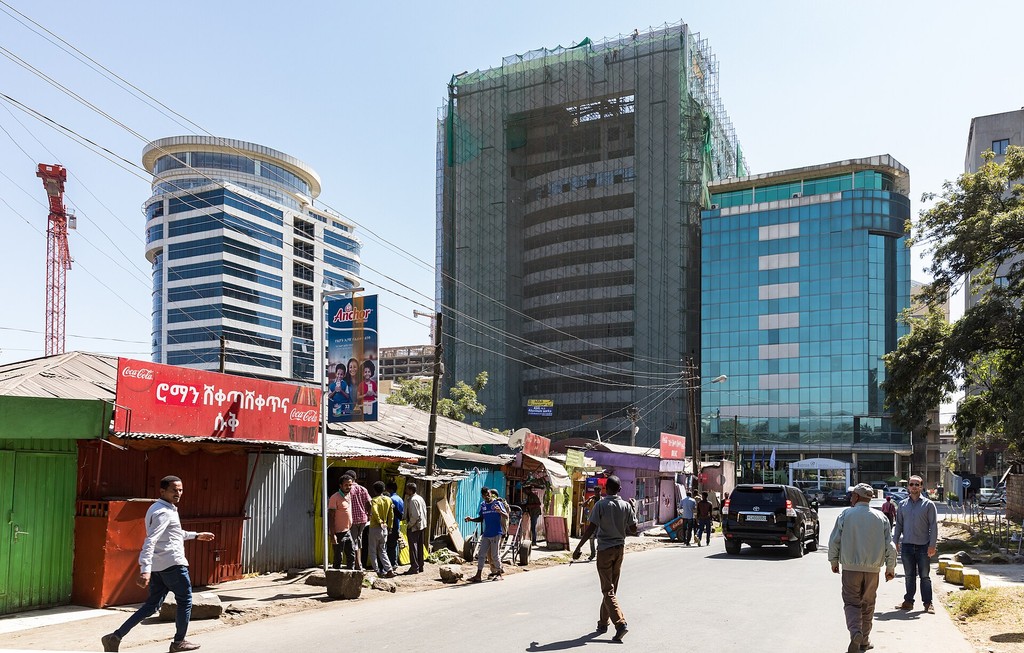
The Velvet Canopy: What NASA’s Atmospheric Lens Reveals About the Breath of Addis Ababa
Addis Ababa, perched high on the East African plateau, is a city defined by its verticality and its headlong rush into the future. Known as the diplomatic capital of Africa, it is a metropolis where gleaming glass high-rises rise alongside sprawling, historic markets, all suspended in the thin mountain air. Yet, beneath this high-altitude sky lies a more terrestrial, suffocating reality: a persistent veil of black carbon. This fine particulate matter—the carbonaceous soot of diesel engines, agricultural burns, and domestic hearths—does more than dim the vistas of the Ethiopian highlands. It acts as a silent ledger of human activity, tracing the contours of daily life, economic necessity, and seasonal survival in one of the world's fastest-growing urban landscapes.
To map this invisible architecture of soot, a NASA-funded air quality monitoring network has spent years gathering some of the most granular, long-term data ever compiled in the region. The findings reveal that Addis Ababa’s atmosphere is not a static pool of pollution, but a dynamic, breathing entity. The data captures the sharp, diurnal peaks of the city’s rush hours—moments when idling diesel trucks clog the arterial roads of the Merkato—contrasted against the quiet, smoky smolder of evening cooking fires. By tracking these temporal shifts, researchers have managed to translate the abstract chemistry of air pollution into a vivid narrative of daily human movement, exposing how seasonal weather patterns and cultural practices dictate the very air the city's four million residents inhale.
> "The data does not merely measure particles; it measures a society in transition, caught between the legacy of ancient hearths and the exhaust of modern engines."
The sources of this black carbon are as varied as they are deeply woven into the socio-economic fabric of the city. On one hand, there is the relentless combustion of a modernizing economy: the heavy-duty transit and poorly refined fuels of an expanding transport sector. On the other, there are the traditional practices that have sustained the region for millennia, such as the burning of biomass for domestic heating and the baking of injera, the staple sourdough flatbread. During the dry season, these local emissions are compounded by regional agricultural burning, which sends plumes of smoke drifting over the Entoto Hills to settle in the valley below. It reveals a delicate, sometimes painful tension between the necessity of daily survival and the physical toll of its byproduct.
Ultimately, this NASA-backed initiative represents more than a triumph of telemetry; it is a critical diagnostic tool for a continent facing unprecedented urban migration. By transforming Addis Ababa's atmospheric haze into precise, actionable data, the study provides a blueprint for targeted urban intervention. For policymakers, the challenge is no longer identifying if the air is compromised, but rather choreographing solutions that respect the rhythms of the city—from upgrading transit fleets to facilitating cleaner cooking technologies. As the sun sets over the Ethiopian capital, casting a copper glow through the particulate-laden air, the science makes one thing clear: the path to a sustainable urban future begins with understanding the invisible threads that tie the city's streets to its sky.