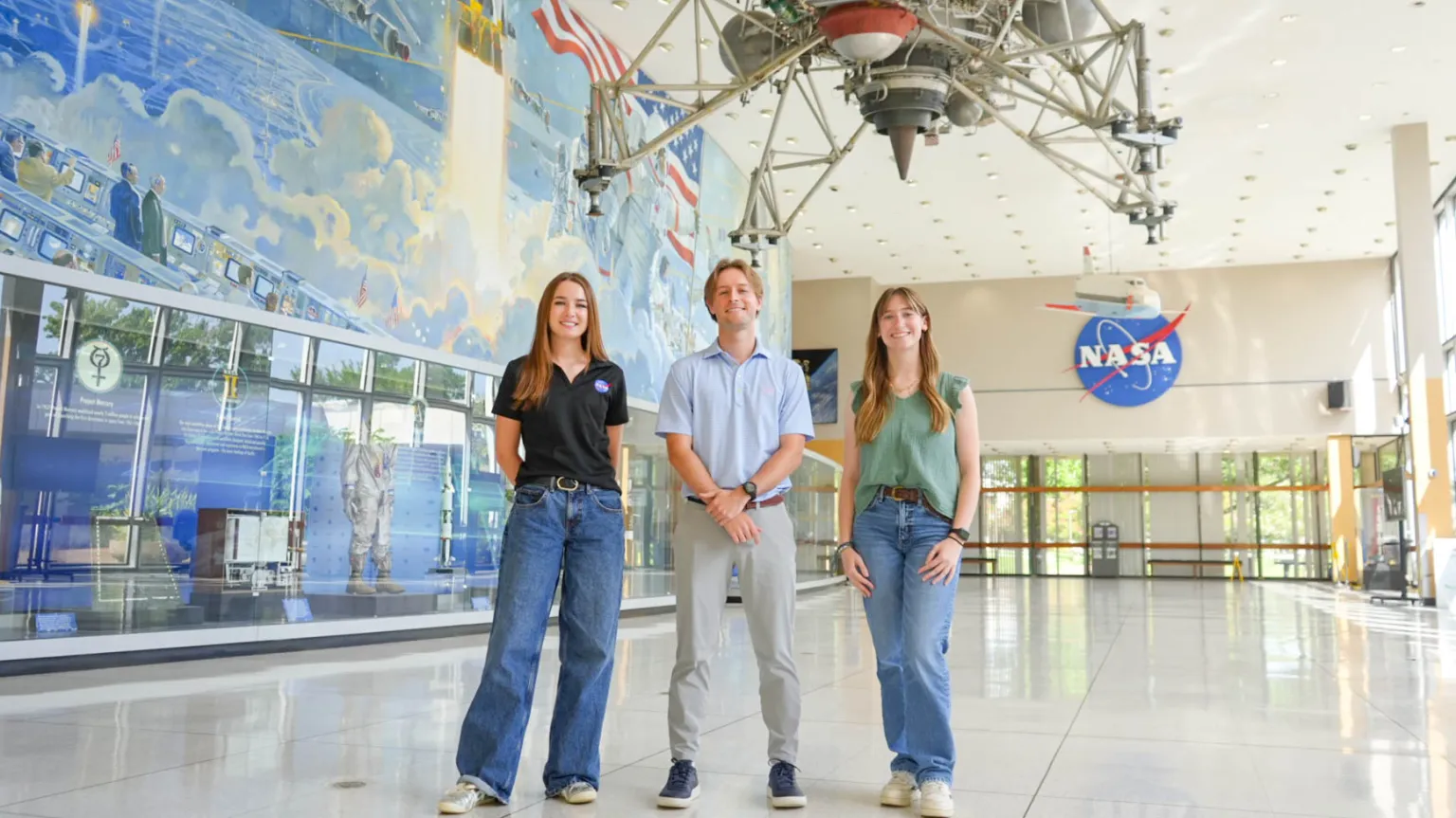
The Apprentices of the Cosmos: Inside NASA’s Crucible of Ingenuity
At Johnson Space Center, a new generation of interns is translating academic theory into the unforgiving calculus of deep-space exploration.
Beneath the relentless, humid expanse of the Houston sky, the Lyndon B. Johnson Space Center stands as a secular cathedral of the late machine age—a sprawling complex where mid-century brutalism meets the infinite. Here, where the ghosts of the Apollo missions still whisper through the corridors, a quiet but profound generational shift is underway. A cohort of NASA interns, drawn from the vanguard of global academia, has arrived not merely to witness history, but to write its next chapter. Far from the stereotypical purgatory of clerical busywork, these young scientists, engineers, and communicators are being integrated directly into the nervous system of American aerospace, tasked with the dizzying responsibility of guiding humanity's return to the lunar surface and, ultimately, the red horizon of Mars.
The transition from the pristine abstraction of university lecture halls to the abrasive reality of applied spaceflight is both sudden and demanding. At Johnson, these interns find themselves working alongside veteran minds, translating elegant chalkboard mathematics into the robust engineering required to survive the vacuum. Whether they are refining the thermal dynamics of the Orion spacecraft, programming autonomous navigation systems, or crafting the narrative tissue that connects public imagination to scientific endeavor, their labor is immediate and consequential. It is an intense, hands-on apprenticeship where the margin for error is non-existent, and the mentorship is forged in the crucible of real-world missions.
> "We are not just preparing a workforce; we are inheriting a legacy of daring exploration and transforming it into a sustainable, multi-planetary future."
Yet, the significance of this program extends far beyond the technical expertise accrued over a semester. In an era defined by a commercialized and fiercely competitive new space race, these students represent the strategic intellectual capital of a nation reasserting its cosmic ambitions. As the agency pivots toward the sustainable exploration of the Artemis missions, these interns are learning to navigate a landscape where private enterprise and public mandate converge. They are the architects of a new epoch, proving that the future of exploration is not merely a matter of hardware, but of human ingenuity ground into precise, hard-won progress.